KAZALCI OKOLJA

Environmental indicators in Slovenia


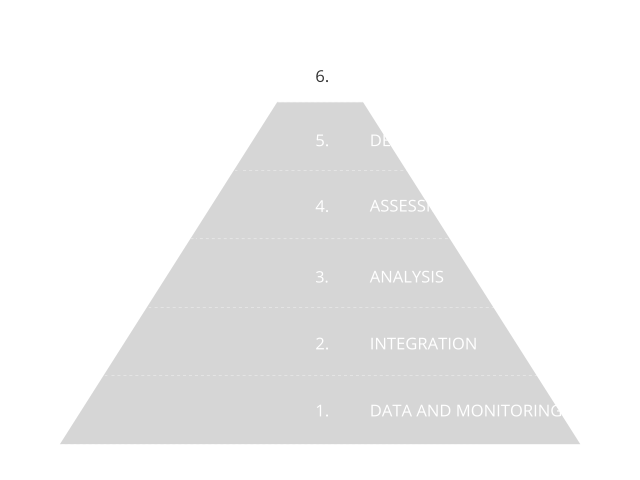
Environmental indicators are based on graphs, maps and assessments and as such present environmental trends in Slovenia. The indicators represent one of the four pillars of our environmental reporting, and are prepared in accordance with the Environmental Protection Act. The Environmental Indicators in Slovenia website enables users to browse among 180 indicators. They are based on numerical data and they indicate the state, characteristics and trends of environmental development in Slovenia. They are prepared using a systematic approach based on data and monitoring, as shown in the information pyramid.

Did you know?

Good

In 2022, agriculture accounted for 97.5% of total ammonia emissions. From 1990 to 2023, ammonia emissions in Slovenian agriculture decreased by 31.8% and by 15.6% since 2005. Slovenian agriculture is achieving the overall emissions target set out in the NEC Directive (a gradual reduction of at least 15% by 2030 compared to 2005).

Neutral

Slovenia belongs to the EU Member States with a lower level of specialization in agriculture. This is reflected in the number of specialized farms and the surface area of agricultural land treated by these holdings. Specialized farms in Slovenia generate a smaller share of standard output than the average in the European Union, which indicates that the processes of concentration and specialization of agricultural production in Slovenia is slower than in European Union.

Neutral

Changes in the size structure show that concentration processes are continuing regarding the extent of the agricultural land, while in the area of the livestock production these processes have slowed down. Nevertheless, due to its small size on average, the competitiveness of Slovenian farms is low compared to the EU–27 countries.

Good

The amount of waste from coal combustion is decreasing as a result of the reduction in the use of coal for electricity generation. In 2022, the amount was 15% lower than the previous year. By far the largest source is the Šoštanj thermal power plant. Most of the waste is used as fill material in mines.

Good

It is estimated that in 2021, over €396 million in energy subsidies was allocated in Slovenia (or 356 € million when adjusted to constant prices in 2015). Incentives for environmentally harmful energy production from fossil fuels and the use of fossil fuels represented 26% of all energy subsidies in 2021, whereas this share was as high as 51% in 2015. Significant progress is observed in subsidizing production from renewable energy sources, CHP, and energy efficiency measures.


Life expectancy at birth in Slovenia is gradually increasing for both men and women. It is slightly higher for women than for men. Longer life expectancy at birth is recorded in western Slovenia. In 2021, life expectancy at birth was 83.8 years for women and 77.7 years for men, with an average of 80.7 years in Slovenia compared to 80.1 years in the EU.