KAZALCI OKOLJA

Environmental indicators in Slovenia


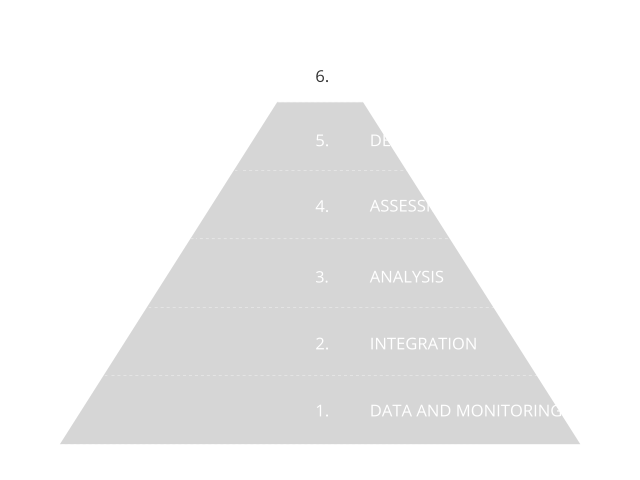
Environmental indicators are based on graphs, maps and assessments and as such present environmental trends in Slovenia. The indicators represent one of the four pillars of our environmental reporting, and are prepared in accordance with the Environmental Protection Act. The Environmental Indicators in Slovenia website enables users to browse among 180 indicators. They are based on numerical data and they indicate the state, characteristics and trends of environmental development in Slovenia. They are prepared using a systematic approach based on data and monitoring, as shown in the information pyramid.

Did you know?

Neutral

In 2023, 65% of the population was connected to municipal wastewater treatment systems with secondary or tertiary treatment, which do not produce GHG emissions. Compared to the previous year, the share increased slightly, and compared to 2017, it rose by 3.5 percentage points.

Good

Net greenhouse gas (GHG) emissions in the LULUCF sector amounted to -4.452 kt CO2 eq in 2024, indicating that the sector was a net sink. Compared with 2005, the size of the net sink was 41% lower, mainly due to the impacts of natural disturbances in forests and increased harvesting levels over the past decade. According to the Slovenian Forest Service, timber harvesting in 2025 decreased by approximately 13% compared to 2024, while the share of sanitary fellings remained high, accounting for around 32% of total recorded harvesting.

Neutral

According to the short-term projection, ESR emissions in 2025 were 0.6% higher than actual emissions in 2024. The difference can be attributed mainly to the industry and transport sectors, and to a lesser extent to the electricity and heat production and consumer goods sectors. Compared to the annual target for 2025 under Regulation (EU) 2023/857, emissions were higher by 318 kt CO2 eq. or 3.1%, and compared to the indicative annual value from the NECP 2024, they were higher by 934 kt CO2 eq. or 9.7%.

Bad

In 2024, taking into account only the production of energy from RES in Slovenia, Slovenia achieved a 24.6% share of RES in gross final energy consumption. To achieve a binding 25% national target share of RES under the Directive 2009/28/EC, Slovenia purchased the missing production from RES. The share in heating and cooling as well as the share in transport sector, are still significantly lagging behind the planned development.

Neutral

In 2024, greenhouse gas (GHG) emissions from sources covered by Regulation (EU) 2023/857 increased by 1.8% compared to the previous year. Nevertheless, they remained 0.4% (41 kt CO₂ eq) below the annual target set under the Regulation. The National Energy and Climate Plan from 2024 (NECP 2024) sets a more ambitious 2030 target for reducing non-ETS emissions than the EU Regulation. A comparison with the indicative trajectory towards this target, starting in 2021, shows that emissions were 5 percentage points above the trajectory in 2024.

Neutral

Primary energy consumption amounted to 6,297 ktoe in 2024 and increased by 3.8% compared to the previous year. The increase, which occurred for all fuels, was due to both higher final energy consumption and increased electricity production. Primary energy consumption was 120 ktoe (- 1.9%) lower than the indicative target value for 2024 from the National Energy and Climate Plan from 2024 (NECP 2024). The indicative annual value was thus achieved.