KAZALCI OKOLJA

Environmental indicators in Slovenia


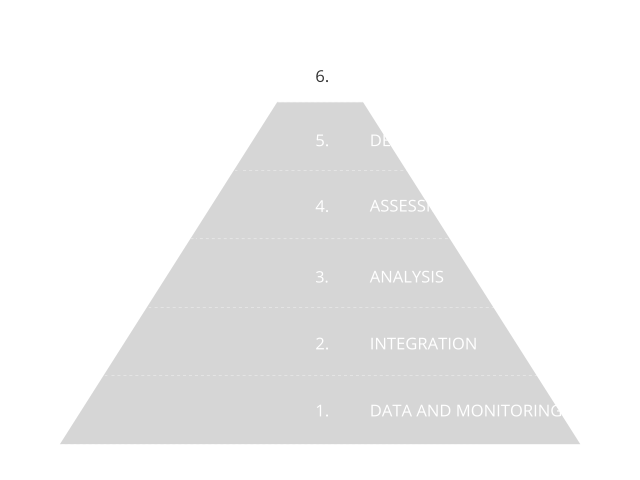
Environmental indicators are based on graphs, maps and assessments and as such present environmental trends in Slovenia. The indicators represent one of the four pillars of our environmental reporting, and are prepared in accordance with the Environmental Protection Act. The Environmental Indicators in Slovenia website enables users to browse among 180 indicators. They are based on numerical data and they indicate the state, characteristics and trends of environmental development in Slovenia. They are prepared using a systematic approach based on data and monitoring, as shown in the information pyramid.

Did you know?

Bad

In Slovenia, the majority of food is estimated to be imported. Before 2004, less than half of all available food came from abroad, but both food imports and exports increased significantly after Slovenia’s accession to the EU. The share of imported food has since continued to grow, and after 2020, less than one-fifth of the available food was of domestic origin. Most of the food Slovenia imports comes from European Union Member States, with about 60% originating from neighbouring countries (Austria, Croatia, Italy, and Hungary).

Good

According to the data for 2023, GHG emissions per unit of electricity produced amounted to 166 gCO2/kWh. In the period 1992–2023, the intensity of GHG emissions decreased by 62,4%. Compared to the EU-27 average, intensity of GHG emissions in Slovenia in 2023 was 19,8% lower.

Neutral

In 2023, 65% of the population was connected to municipal wastewater treatment systems with secondary or tertiary treatment, which do not produce GHG emissions. Compared to the previous year, the share increased slightly, and compared to 2017, it rose by 3.5 percentage points.

Bad

In 2023, the share of RES in transport, after a significant drop in 2022, increased again and amounted to 10%. With this, it was 0.7 percentage points behind the non-binding 2023 target from the National Energy and Climate Plan (NECP).

Good

From 2012 to 2023, the installed capacity of the systems for the production of electricity from RES has increased by 78,5%. Almost two-thirds of that increase, 51,2%, was achieved in the last four years. The indicator is currently on a trajectory of achieving the indicative targets until 2030 set in the National Energy and Climate Plan (NECP).

Good

Energy efficiency in industry improved significantly between 2005 and 2023, with a 43% increase in 2023 compared to 2005. The chemical industry, machinery and equipment manufacturing, non-ferrous metals, and paper manufacturing contributed the most to the improvement, while steel production and non-metallic mineral products contributed the least.