KAZALCI OKOLJA

Environmental indicators in Slovenia


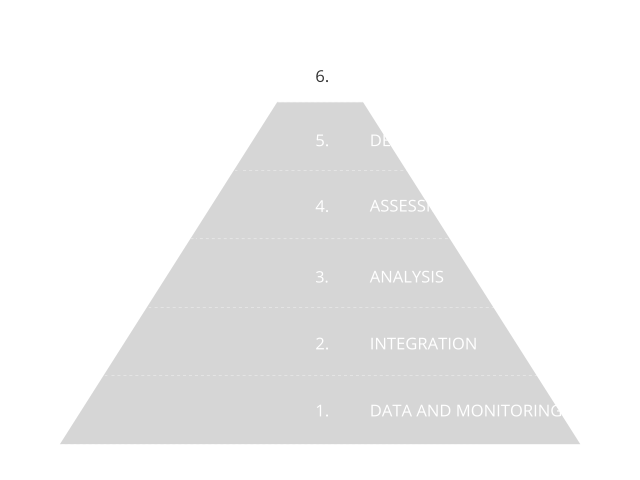
Environmental indicators are based on graphs, maps and assessments and as such present environmental trends in Slovenia. The indicators represent one of the four pillars of our environmental reporting, and are prepared in accordance with the Environmental Protection Act. The Environmental Indicators in Slovenia website enables users to browse among 180 indicators. They are based on numerical data and they indicate the state, characteristics and trends of environmental development in Slovenia. They are prepared using a systematic approach based on data and monitoring, as shown in the information pyramid.

Did you know?

Neutral


During the period from 2012 to 2022, taxes on energy sources in Slovenia fluctuated, generally decreasing except for electricity for industrial consumers, where they increased due to levies. Between 2020 and 2022, temporary measures were introduced to reduce taxes on certain energy sources due to the COVID-19 pandemic and the war in Ukraine. Compared to the EU-27, the taxation of electricity and natural gas for households in Slovenia was lower, while it was higher for industrial consumers; diesel fuel taxation was higher, while gasoline taxation was lower.


Neutral

Water protection areas (WPA) cover 17.4% of Slovenia's territory. The land use structure in water protection areas is dominated by forest (62.1 %), followed by grassland (13.5 %) and arable land (10.5 %). The amount of built-up land in the water protection areas is increasing, while a decrease in arable land and an increase in the share of organically farmed land indicate positive changes in the direction of extensification of land use.


Neutral

Although a quarter of the newly registered personal cars in Slovenia are electric or hybrid, their share among all personal vehicles is only around 3%. This is due to the fact that households rarely decide to purchase new cars, resulting in a high average age of cars over 10 years, and it will take a long time for our vehicle fleet to become less energy-intensive. Slovenia ranks in the bottom quarter of European countries by the share of first registrations of new personal electric vehicles.

Good

The vast majority of registered personal vehicles are still powered by conventional fuels (petrol and diesel). The proportion of vehicles with alternative propulsion systems has doubled from 2019 to 2022, yet it remains very small.

Good

The trend of decreasing energy consumption in households between 2010 and 2022 indicates a positive attitude of the population towards efficient energy use. However, since 2017, a negative trend has been observed, particularly in households' awareness of their own energy consumption and in their consideration of more efficient use. With three-quarters of households in 2022 rating their energy consumption as medium to very high, a significant potential for reducing energy consumption in this sector is suggested.

Neutral

The car remains the primary mode of transportation, regardless of the distance or purpose of the trip, while the use of public transport does not show a significant increase. The main barriers to using public transport are poor accessibility, inadequate timetables, a lack of connections, and difficult access. Time inefficiency is also a significant issue. However, there are reasons for optimism, as households are increasingly open to using public transport and car-sharing.