KAZALCI OKOLJA

Environmental indicators in Slovenia


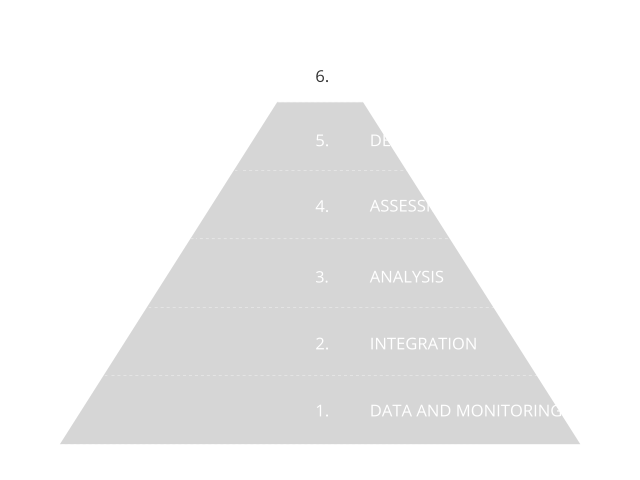
Environmental indicators are based on graphs, maps and assessments and as such present environmental trends in Slovenia. The indicators represent one of the four pillars of our environmental reporting, and are prepared in accordance with the Environmental Protection Act. The Environmental Indicators in Slovenia website enables users to browse among 180 indicators. They are based on numerical data and they indicate the state, characteristics and trends of environmental development in Slovenia. They are prepared using a systematic approach based on data and monitoring, as shown in the information pyramid.

Did you know?

Good

Slovenia has a fairly high level of energy intensity that is decreasing, especially in the last few years. Average yearly decrease rate in the period 2005-2021 was 2.7 %. Compared to EU-27 Slovenia had 37 % higher intensity in 2020, being 11 % points lower than in 2005.

Neutral

Total greenhouse gas emissions are projected to remain at similar levels as today until 2030 under projection with existing measures, then decline. Under projection with additional measures emissions will decline faster. By 35% by 2030 and by 88% by 2050. Projections show that with intensive implementation of measures, it is possible to achieve the set targets.

Bad

The share of renewable energy sources (RES) in the use of fuels in industry amounted to 12,8% in 2023, which was 3.6 percentage points behind the annual indicative target value. The 2023 indicative target was thus not achieved. In order to achieve the target of 30% of RES in the use of fuels in industry in 2030, the share of RES will have to increase by 18 percentage points or by about approximately 3 percentage points per year.

Good

The share of electricity from renewable energy sources in gross electricity consumption reached 50.7% in 2024, representing a noticeable increase compared to the previous year. This growth was driven by favourable hydrological conditions and continued expansion of solar power generation, while gross electricity consumption decreased by 3.6%. Hydropower remains the key source of renewable electricity, accounting for 78% of all renewable electricity produced in 2024.

Bad

In 2024, the amount of incentives for the implementation of measures related to energy efficiency (EE) and renewable energy sources (RES) in non-ETS industry amounted to EUR 1.1 million, i.e. 18 % less than the previous year. Only Eco Fund incentives are considered in this amount, as the projects co-financed under the Operational Programme for the Implementation of the European Cohesion Policy in the 2014–2020 Period (OP ECP) were not prepared in such a way that the monitoring of effects related to climate targets would be possible.

Bad

F-gas emissions from leaks from stationary installations increased again in 2024 due to a significantly higher use of refilled refrigerants. This represented a significant deviation from the indicative target for reducing emissions from the use of F-gases under the EU F-gases Regulation. Compared to 2015, F-gas emissions from leaks were 8% lower in 2024, while, according to the F-gases Regulation, they should have been lower by 69%.