KAZALCI OKOLJA

Environmental indicators in Slovenia


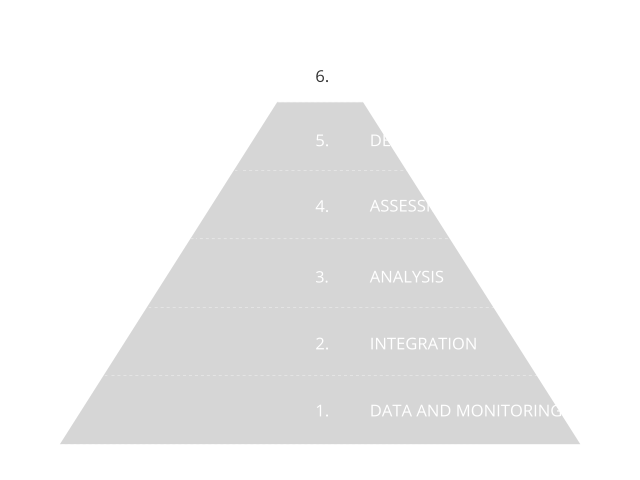
Environmental indicators are based on graphs, maps and assessments and as such present environmental trends in Slovenia. The indicators represent one of the four pillars of our environmental reporting, and are prepared in accordance with the Environmental Protection Act. The Environmental Indicators in Slovenia website enables users to browse among 180 indicators. They are based on numerical data and they indicate the state, characteristics and trends of environmental development in Slovenia. They are prepared using a systematic approach based on data and monitoring, as shown in the information pyramid.

Did you know?

Bad

The average occupancy rate of cars in Slovenia is declining. In heavy goods transport, average occupancy is increasing as a result of the growing share of tractor units in freight transport, which have a higher load capacity. The NEPN emphasizes the importance of increasing vehicle occupancy – e.g., by promoting carpooling, developing appropriate infrastructure, and organizing freight transport more efficiently—as an important contribution to reducing GHG emissions and energy consumption, while governing transport demand and shifting to more sustainable forms of transport.

Bad

The most of energy in transport is used in cars, followed by trucks, the share of which is growing very fast. Efficiency of energy use with excluded influence of transit transport is improving, but too slow.

Good

The most of energy in households is used for heating of appartments. In the period 2009-2012, efficiency of energy use increased a lot, especially on the account of increase of efficiency of energy used for heating.

Neutral

In Slovenia 7 % of people live in flood-prone areas. The most extensive flood areas are in northeast and in subpannonian Slovenia, in subalpine valleys and basins and plains along Ledava, Mura and Ščavnica. The largest share of the population in areas of flooding is in Savinjska (13%), Koroška (12%), Zasavska, (10%) and Osrednjeslovenska (9%) statistical region.

Neutral

In Slovenia the concentration of dioxins in human milk is low and comparable to those in the neighboring countries. Long-term surveillance will be possible once regular national human biomonitoring is established and assured.

Bad

In 2011, electricity consumption increased due to some economic growth. In 2000-2011 period, the average consumption growth was 1.7% per annum, which matches the projections in the current NEP.
Compared to the year 2000, the biggest growth was recorded in services sector, followed by the households.