KAZALCI OKOLJA

Environmental indicators in Slovenia


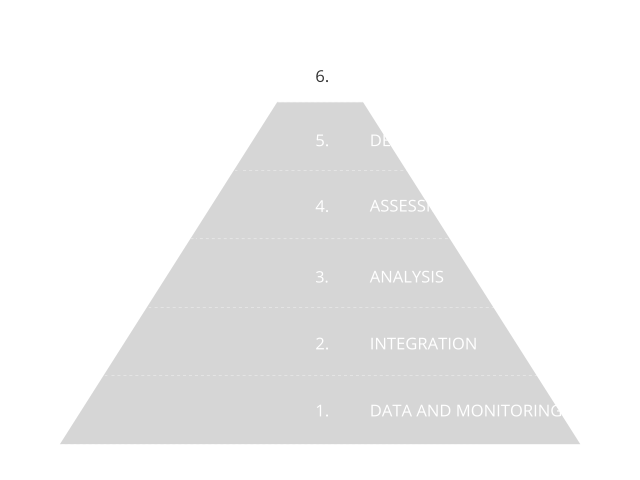
Environmental indicators are based on graphs, maps and assessments and as such present environmental trends in Slovenia. The indicators represent one of the four pillars of our environmental reporting, and are prepared in accordance with the Environmental Protection Act. The Environmental Indicators in Slovenia website enables users to browse among 180 indicators. They are based on numerical data and they indicate the state, characteristics and trends of environmental development in Slovenia. They are prepared using a systematic approach based on data and monitoring, as shown in the information pyramid.

Did you know?

Good

In 2024, the energy reduction in the energy efficiency obligation scheme (EEOS) and alternative measure, t. i. Eco Fund programs, amounted to 671 GWh. The savings were more than a half lower than the previous year, mainly due to the fact that the EEOS obligated parties covered their obligations to a large extent with surpluses of savings from previous years. The target value for 2024 was nevertheless exceeded by 38% – because of the transfer of the part of the surplus savings from 2023 within the EEOS the energy savings amounted to 1,028 GWh.

Bad

In 2023, the share of RES in transport, after a significant drop in 2022, increased again and amounted to 10%. With this, it was 0.7 percentage points behind the non-binding 2023 target from the National Energy and Climate Plan (NECP).

Good

From 2012 to 2023, the installed capacity of the systems for the production of electricity from RES has increased by 78,5%. Almost two-thirds of that increase, 51,2%, was achieved in the last four years. The indicator is currently on a trajectory of achieving the indicative targets until 2030 set in the National Energy and Climate Plan (NECP).

Bad

With the increasing share of electric passenger vehicles, CO2 emissions decreased in 2022 and 2023, but increased slightly in 2024 compared to the previous year due to the decrease in the share. The gap to the target value is almost 34%.

The average emissions of all passenger vehicles increased in 2022 compared to the previous year. In 2023, the average emissions decreased back to approximately the level of 2021. The target values were not achieved.

Bad

The intensity of GHG emissions from fuels and energy in transport in Slovenia was 4.7% lower than the baseline in 2021, which is 1.3 percentage points below the target reduction. Although the intensity is decreasing, the pace is too slow. The largest contribution to reducing intensity comes from the blending of biofuels. In the EU, the largest reductions were achieved by Sweden and Finland, along with 11 other countries that achieved reductions of 6% or more.

Bad

The share of renewable sources in total energy consumption was 18.4% in 2024. It remained unchanged compared to the previous year. The growth of RES is very slow and insufficient to achieve the targets in this area.