KAZALCI OKOLJA

Environmental indicators in Slovenia


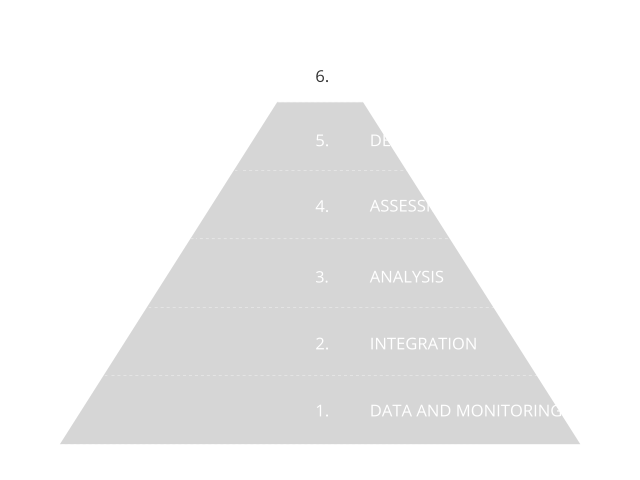
Environmental indicators are based on graphs, maps and assessments and as such present environmental trends in Slovenia. The indicators represent one of the four pillars of our environmental reporting, and are prepared in accordance with the Environmental Protection Act. The Environmental Indicators in Slovenia website enables users to browse among 180 indicators. They are based on numerical data and they indicate the state, characteristics and trends of environmental development in Slovenia. They are prepared using a systematic approach based on data and monitoring, as shown in the information pyramid.

Did you know?

Neutral

In the upcoming years our primary objective is to implement and maintain an effective system of managing waste batteries and accumulators.

Good

Greenhouse gas emissions from forest fires in Slovenia generally account for a small share of emissions in the LULUCF sector, but they can increase significantly in individual years due to major fire events. The highest emissions during the monitoring period were recorded in 2022, when more than 3,000 ha of forest were burned in the Goriški Kras. Higher temperatures, more frequent and severe droughts, and heatwaves may increase the risk of forest fires and their spread in the future, leading to greater uncertainty in the emissions balance and potentially more frequent emission peaks.

Bad

Slovenian forests are over-mature, the current ratio of forest development phases is unfavourable, forest regeneration is too slow, or the areas of forests under restoration are too small to significantly change the share of forest development phases and thus ensure sustainable forest development. The role of forests as a carbon sink is at risk.

Good

Greenhouse gas (GHG) emissions due to land-use change generally show a declining trend. In 2024, emissions from deforestation decreased by 1.5% compared to the previous year, with approximately two-thirds of these emissions resulting from the establishment of agricultural land. Emissions from the expansion of settlements and related land uses decreased by 3% compared to the previous year, with the largest share of emissions (just over 76%) resulting from expansion onto agricultural land.

Good

GHG emissions from industry decreased by 1.7% in 2024 compared with the previous year. Since 2019, an overall downward trend in GHG emissions can be observed in this sector. Emissions from the ETS subsector increased by 6.1% in 2024, following five consecutive years of decline. By contrast, GHG emissions from the non-ETS subsector of industry decreased by 11.2% compared with 2023. In 2024, the ETS subsector accounted for 59.5% of total GHG emissions from industry, while the non-ETS subsector accounted for 40.5%.

Neutral

Most Slovenian forests are still undergoing natural regeneration, which guarantees the stability of future forest stands and adaptation to the changing site conditions caused by climate change. Restoration by planting seedlings and sowing (artificial regeneration) only complements natural regeneration when disturbances occur in the process of the natural regeneration of the forest, e.g. where there is no possibility of natural seeding, with the risk of developing erosion processes on exposed forest areas (e.g.