KAZALCI OKOLJA

Environmental indicators in Slovenia


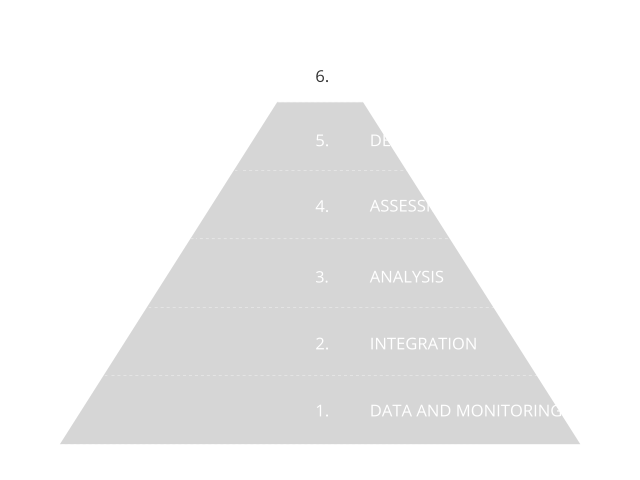
Environmental indicators are based on graphs, maps and assessments and as such present environmental trends in Slovenia. The indicators represent one of the four pillars of our environmental reporting, and are prepared in accordance with the Environmental Protection Act. The Environmental Indicators in Slovenia website enables users to browse among 180 indicators. They are based on numerical data and they indicate the state, characteristics and trends of environmental development in Slovenia. They are prepared using a systematic approach based on data and monitoring, as shown in the information pyramid.

Did you know?

Neutral

Although a quarter of the newly registered personal cars in Slovenia are electric or hybrid, their share among all personal vehicles is only around 3%. This is due to the fact that households rarely decide to purchase new cars, resulting in a high average age of cars over 10 years, and it will take a long time for our vehicle fleet to become less energy-intensive. Slovenia ranks in the bottom quarter of European countries by the share of first registrations of new personal electric vehicles.

Neutral

There are 17.431 parts of nature designated as valuable nature feature, among them 12.148 caves. Any construction or activity in a valuable natural feature area is allowed only if there is no other spatial or tehnical possibility.

Neutral

Areas of protected nature are a measure of the state to preserve natural values and biodiversity in situ. They cover more than 13% of Slovenia’s territory. The largest and the oldest protected area is Triglav National Park, covering almost 84,000 hectares. In recent years, the total surface area of protected areas has expanded largely due to the designation of three landscape parks.

Bad

Slovenian Environmental Agency (ARSO) is responsible for providing monetary compensation for damage caused by protected animal species. The amount of damages fluctuates depending on the available food in nature, according to spring cold or summer drought, there’s more damage expected. The year 2019 was like this, with 1.301 reported damage cases caused by protected animal species (76 % more than the year before), out of which, 1.173 received the compensation. A total of 570.580,39 EUR was paid in compensation, for damage caused by 28 different protected animal species.

Good

Natura 2000 areas were designated in 2004. Acording to the conclusions of bilateral meeting with European Comission in 2014 the Natura 2000 network was expanded in 2016. Natura 2000 area cover 7681 km2 or 37,50% of the total area and 7676 km2 or 37,87 % of the terrestrial area of the country.

Good

Nutrients, especially nitrogen and phosphorus compounds, are important for the growth of algae and higher plants, but in high concentrations can cause undesirable changes in aquatic organisms and seawater quality. Long-term measurements of selected nutrients in the Slovenian sea show that their concentrations have decreased significantly. Therefore, the ecological status of the Slovenian Sea is assessed as good to very good based on nutrients in recent years.