KAZALCI OKOLJA

Environmental indicators in Slovenia


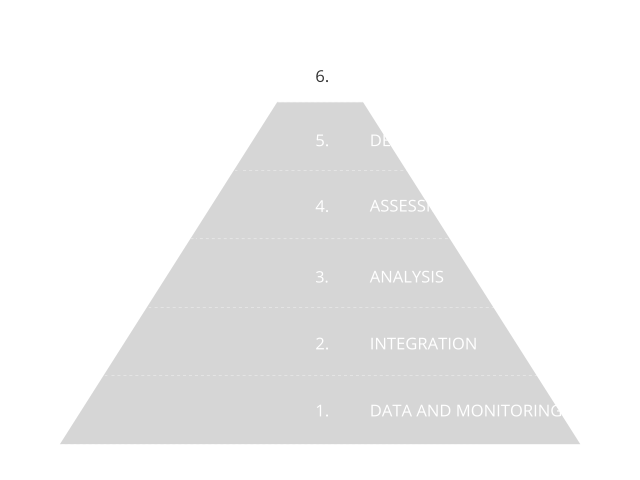
Environmental indicators are based on graphs, maps and assessments and as such present environmental trends in Slovenia. The indicators represent one of the four pillars of our environmental reporting, and are prepared in accordance with the Environmental Protection Act. The Environmental Indicators in Slovenia website enables users to browse among 180 indicators. They are based on numerical data and they indicate the state, characteristics and trends of environmental development in Slovenia. They are prepared using a systematic approach based on data and monitoring, as shown in the information pyramid.

Did you know?

Neutral

In 2021 the Water Rights for special use of water were issued in 8385 acts (water permits, concessions), with additional more than 10.000 cases of minor spatial water uses with neglectable influence on state of water, were in the process of evidencing in the Water Book.

Neutral

In 2022, the number of employees in the environmental goods and services sector increased by 4.2%. The share of employees in this sector in relation to all employees in Slovenia has not changed much in recent years. Slovenia's goal is to increase the number of green jobs, the target value has, however, not been set. In order to compare the situation in Slovenia with that in the EU, changes compared to the previous year are monitored.

Neutral

The implicit tax rate on energy in Slovenia amounted to 247 €/toe in 2023, which is 4% higher than in the previous year but still 17% lower than in 2016, when it reached its peak for the period 2012–2023. Compared with the EU-27, it was 3.6% above the EU average in 2023, while it was below the European average only in the years 2020–2022 due to temporary crisis-related measures. In addition to tax policy, the rate is also influenced by changes in the structure of energy consumption and energy efficiency.

Neutral

Incentives that go against the goal of reducing greenhouse gas (GHG) emissions have increased again after 2021, primarily due to extensive emergency measures introduced in response to rising energy prices. Excluding these temporary measures, the level of such subsidies in 2023 did not change significantly compared to 2020, with their value increasing by approximately 5.7%.

Neutral

The emission productivity in Slovenia improved in 2023 and amounted to 3,18 EUR2010/kg CO2 ekv. Despite the progress made in recent years, is, however, the progress in emission productivity in Slovenia when compared to the European Union (EU), still relatively slow, thus there is a need to further strengthen the connection between economic development and measures for reducing GHG emissions.

Good

According to the data for 2023, GHG emissions per unit of electricity produced amounted to 166 gCO2/kWh. In the period 1992–2023, the intensity of GHG emissions decreased by 62,4%. Compared to the EU-27 average, intensity of GHG emissions in Slovenia in 2023 was 19,8% lower.