KAZALCI OKOLJA

Environmental indicators in Slovenia


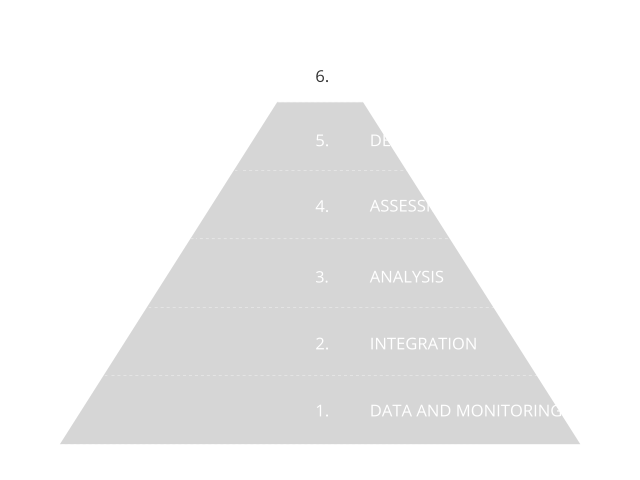
Environmental indicators are based on graphs, maps and assessments and as such present environmental trends in Slovenia. The indicators represent one of the four pillars of our environmental reporting, and are prepared in accordance with the Environmental Protection Act. The Environmental Indicators in Slovenia website enables users to browse among 180 indicators. They are based on numerical data and they indicate the state, characteristics and trends of environmental development in Slovenia. They are prepared using a systematic approach based on data and monitoring, as shown in the information pyramid.

Did you know?

Neutral

By 2024, the implementation of energy efficiency (EE) and renewable energy source (RES) measures in the public sector resulted in a cumulative energy savings of 358 GWh, and the cumulative CO2 emissions reduction was 87 kt. The 2020 target values were only achieved in 2023 and 2022. The gap is largely due to the insufficient intensity of investments in 2016 and 2017. The transition from one financial perspective to the other is expected to be visible also in 2025. No 2030 targets have been set for this indicator.

Bad

Energy consumption in transport has been declining slightly in recent years. This is due to combination of lower domestic vehicle consumption as well as lower sales to foreign vehicles. Most of the energy is used in road transport. Consumption of diesel fuel in road transport is increasing.


Neutral

Water consumption in Slovenia represents a relatively small proportion of the annual gross water outflow from the country. In 2019, the annual WEI+ index was around 3%, and same 3% compared to the periodic average of water availability. The Long-term Annual Average Water Exploitation Index shows a slight decrease, but the trend is not statistically significant.

Bad

The quick rate of retreat of the Triglav Glacier, which began in the second half of the 20thcentury, further accelerated till the beginning of the 21st century. Due to increasing intensity of ice thinning, outcropping rocks began to emerge in the middle of the glacier, which disintegrated into two parts in 1992. In the last part of the first decade of the 21st century, the glacier has been retreating at a slower rate. The last major recession of the glacier was registered after the above average hot summer of 2003.

Bad

Households in Slovenia consume 21.6% of final energy. In 2019, consumption was the lowest in the observed period from 2000 to 2019, but even higher than the target for 2020. Most energy is used for heating. Among energy products, use of heating oil decreased sharply while the use of natural gas increased.

Good

The population of brown bear in Slovenia is in a favorable state of preservation, with a trend of improvement. The estimated number of bears in spring was 990.

The population is the northwestern part of the Dinaric-Pind population, which was in 2012  estimated at 3950 individuals and is stable or growing.