KAZALCI OKOLJA

Environmental indicators in Slovenia


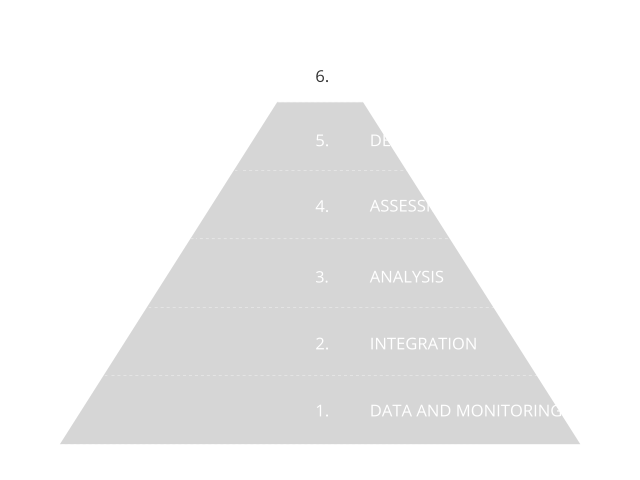
Environmental indicators are based on graphs, maps and assessments and as such present environmental trends in Slovenia. The indicators represent one of the four pillars of our environmental reporting, and are prepared in accordance with the Environmental Protection Act. The Environmental Indicators in Slovenia website enables users to browse among 180 indicators. They are based on numerical data and they indicate the state, characteristics and trends of environmental development in Slovenia. They are prepared using a systematic approach based on data and monitoring, as shown in the information pyramid.

Did you know?

Bad

The favorable conservation status of habitat types in Slovenia is reached by just over a third of Europe's important habitat types.In order to achieve the objectives of the EU Biodiversity Strategy, it is necessary to follow the guidelines of the Regulation on Special Conservation Areas (Natura 2000 sites) more rigorously and to implement the Natura 2000 management program. This is especially important for areas with freshwater, wetland, wetland and grassland habitat types.

Neutral

Overall, the data confirm a clear distribution of carbon stocks by land use: organic/peat-influenced soils and uses with permanent vegetation cover (peatland meadows, permanent grasslands, tree- and shrub-dominated vegetation) reach the highest stocks (approximately 105–190 t/ha, with peatlands at the top). These are followed by extensive orchards (around 100 t/ha), while intensive orchards and vineyards remain in the lower range (approximately 59–94 t/ha). Arable land falls within the medium range, but shows signs of an increase after 2020 (113.3 t/ha).

Neutral

In the period 2022–2024, the share of agricultural land decreased by 0.3 %. The most significant declines were observed in overgrown agricultural area, arable land, and vineyards, while increases occurred in grasslands, less present agricultural land uses, and uncultivated agricultural land. A positive development during this period was the increase in the share of grasslands (permanent and wet grasslands), which may indicate a gradual restoration of agricultural landscape. Slovenia remains well bellow both the European and global averages in terms of arable land per capita.

Neutral

The total use of plant protection products (PPPs) in Slovenia has decreased by nearly two-thirds over the past 30 years — from 2,031 tons in 1992 to 733 tons in 2024. Because of the large share of permanent crops, PPP use per hectare in Slovenia remains relatively high, but comparable to other EU countries with a similar production structure. Over the last decade, Slovenia has significantly reduced the intensity of PPP use on utilised arable land and permanent crops: from an average of 6.57 kg/ha in 2000–2010 to only 3.63 kg/ha in 2024.

Good

The response of agricultural holdings to the agricultural policy and favourable market opportunities, which support the spreading of organic farming has been growing every year. The area intended for organic farming has increased in the period 1999–2023 from 2,400 ha to 54,602 ha, or from 0.5% to 11.4% of the total utilised agricultural area. The structure of agricultural land with organic farming is strongly dominated by grassland (78% in 2023), which shows that livestock farms more frequently convert to organic farming.

Bad

Foodborne infections or intestinal infectious diseases (IID) remain a significant public health concern in Slovenia and globally. The incidence of foodborne infections or IID in Slovenia, as in other countries, is estimated based on reported cases of intestinal infectious diseases.