KAZALCI OKOLJA

Environmental indicators in Slovenia


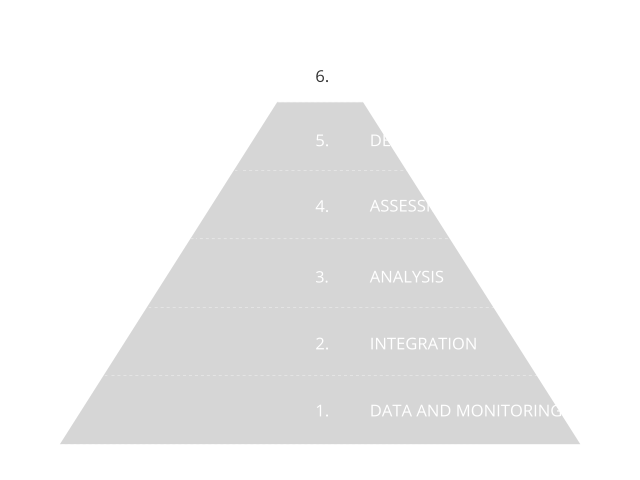
Environmental indicators are based on graphs, maps and assessments and as such present environmental trends in Slovenia. The indicators represent one of the four pillars of our environmental reporting, and are prepared in accordance with the Environmental Protection Act. The Environmental Indicators in Slovenia website enables users to browse among 180 indicators. They are based on numerical data and they indicate the state, characteristics and trends of environmental development in Slovenia. They are prepared using a systematic approach based on data and monitoring, as shown in the information pyramid.

Did you know?

Good

In 2023, around 182 million pieces of plastic carrier bags were placed on the Slovenian market, of which 99% were those with a wall thickness of less than 50 microns (light plastic carrier bags). In Slovenia, the consumption of lightweight plastic carrier bags amounted to 85 bags per capita in 2023 In the same year, 145.9 million pieces of single-use food containers made wholly or partly of plastic and 174.4 million pieces of single-use beverage cups made wholly or partly of plastic were placed on the Slovenian market.

Bad

On average, households expenditure by consumption purpose in Slovenia was devoted predominantly on transport, housing, food and non-alcoholic beverages, which is similar to spending in the EU. The majority, a fifth of household spending, consisted of transport expenses. Energy poverty is present in approximately 7% of households, which is around 62,000 households or 102,000 inhabitants.

Bad

More than three-quarters of the apartments/houses were built before 1990, and the majority, nearly half, between 1961 and 1990. The Slovenian housing stock is therefore old and in need of renovation; in their renovation lies the greatest potential for reducing environmental impacts and reducing energy consumption. At the same time, the share of households with low incomes - i.e. those who are also expected to invest in apartment/house renovations - is around a quarter of all households.

Bad

In Slovenia, the share of one-member households - with higher expenditures and also a greater impact on the environment - has been rapidly increasing in the last ten years. Most households own all the usual household appliances (e.g. washing machine, refrigerator, etc.) and have been rapidly equipping themselves with new ones in recent years; thus electricity consumption does not decrease but increases slightly. Otherwise, most of the electricity is used for space and water heating and cooking. The consumption of electricity for cooling also increased, but decreased for lighting.

Neutral

Population trends of selected bird species show that the state of the environment in the cultural landscape is still deteriorating, especially in some parts such as Prekmurje and Ljubljansko barje. The population of selected forest bird species is stable, however, a trend of deterioration of its habitat was recorded in recent years, as a result of intensified logging. Bird populations that winter on Slovenian rivers and other water bodies have different trends that are mostly in line with trends of regional biogeographic populations of waterbirds in Europe.

Neutral

Environmental protection is important to the residents of the EU and Slovenia. The most significant environmental issues mentioned are growing amount of waste, air pollution, and climate change. A large majority of respondents agreed with statements expressing concern about various environmental problems and acknowledging their impact on their daily lives and health.