KAZALCI OKOLJA

Environmental indicators in Slovenia


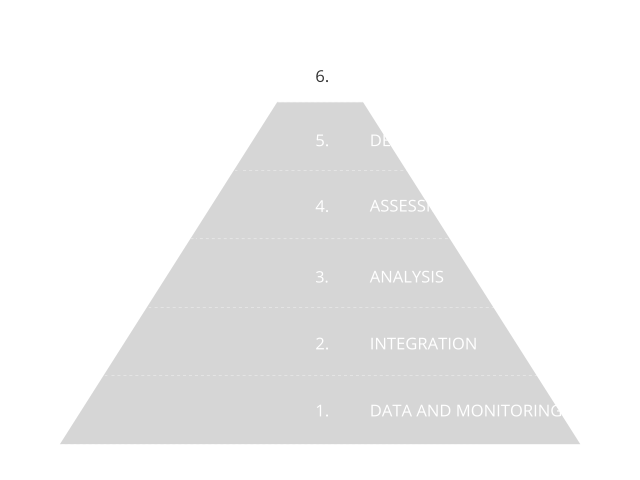
Environmental indicators are based on graphs, maps and assessments and as such present environmental trends in Slovenia. The indicators represent one of the four pillars of our environmental reporting, and are prepared in accordance with the Environmental Protection Act. The Environmental Indicators in Slovenia website enables users to browse among 180 indicators. They are based on numerical data and they indicate the state, characteristics and trends of environmental development in Slovenia. They are prepared using a systematic approach based on data and monitoring, as shown in the information pyramid.

Did you know?

Good

In 2024, the energy reduction in the energy efficiency obligation scheme (EEOS) and alternative measure, t. i. Eco Fund programs, amounted to 671 GWh. The savings were more than a half lower than the previous year, mainly due to the fact that the EEOS obligated parties covered their obligations to a large extent with surpluses of savings from previous years. The target value for 2024 was nevertheless exceeded by 38% – because of the transfer of the part of the surplus savings from 2023 within the EEOS the energy savings amounted to 1,028 GWh.

Good

Most of industrial energy is consumed in the production of metals. In the period 2008-2012, the efficiency of energy use has increased, while the trends in individual sectors are very different and diverse.

Neutral

Children in primary schools and kindergartens in the Municipality of Nova Gorica are only partially exposed to exceeded levels of road traffic noise. Measurements show that limit value for playgrounds (55 dB (A), set as a recommendation by the World Health Organization, is exceeded only at the most exceeded facade by 3 of 12 elementary schools and 5 of 16 kindergartens. As in the school year 2012/2013 1,162 students (in those 3 schools) and 439 children (in those 5 kindergartens) were exposed to some noise it would be reasonable to carry out noise measurements.

Bad

Electricity production from CHP has significantly increased in 2012, but it was nevertheless still far from the target for 2010.

Bad

The most of energy in transport is used in cars, followed by trucks, the share of which is growing very fast. Efficiency of energy use with excluded influence of transit transport is improving, but too slow.