KAZALCI OKOLJA

Environmental indicators in Slovenia


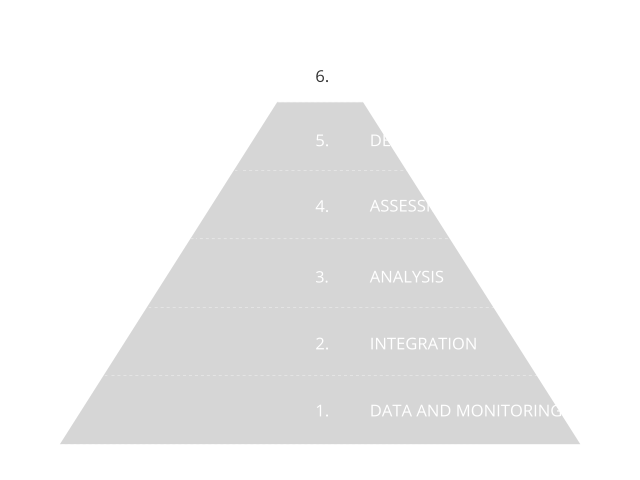
Environmental indicators are based on graphs, maps and assessments and as such present environmental trends in Slovenia. The indicators represent one of the four pillars of our environmental reporting, and are prepared in accordance with the Environmental Protection Act. The Environmental Indicators in Slovenia website enables users to browse among 180 indicators. They are based on numerical data and they indicate the state, characteristics and trends of environmental development in Slovenia. They are prepared using a systematic approach based on data and monitoring, as shown in the information pyramid.

Did you know?

Neutral

The year 2022 was exceptional for electricity production in Slovenia, as difficulties with coal supplies led to the lowest production from solid fuels since 1992, and drought also reduced production from renewable energy sources. This resulted in a record share of nuclear energy in electricity production (42%) and very low total production (13.4 TWh), the lowest since 1999. The share of domestic electricity production was 71%, below the target set in the National Energy and Climate Plan, and the annual production was 40% lower than the gross consumption.

Neutral

Areas of protected nature are a measure of the state to preserve natural values and biodiversity in situ. They cover more than 13% of Slovenia’s territory. The largest and the oldest protected area is Triglav National Park, covering almost 84,000 hectares. In recent years, the total surface area of protected areas has expanded largely due to the designation of three landscape parks.

Bad

Slovenian Environmental Agency (ARSO) is responsible for providing monetary compensation for damage caused by protected animal species. The amount of damages fluctuates depending on the available food in nature, according to spring cold or summer drought, there’s more damage expected. The year 2019 was like this, with 1.301 reported damage cases caused by protected animal species (76 % more than the year before), out of which, 1.173 received the compensation. A total of 570.580,39 EUR was paid in compensation, for damage caused by 28 different protected animal species.

Good

Natura 2000 areas were designated in 2004. Acording to the conclusions of bilateral meeting with European Comission in 2014 the Natura 2000 network was expanded in 2016. Natura 2000 area cover 7681 km2 or 37,50% of the total area and 7676 km2 or 37,87 % of the terrestrial area of the country.

Good

Nutrients, especially nitrogen and phosphorus compounds, are important for the growth of algae and higher plants, but in high concentrations can cause undesirable changes in aquatic organisms and seawater quality. Long-term measurements of selected nutrients in the Slovenian sea show that their concentrations have decreased significantly. Therefore, the ecological status of the Slovenian Sea is assessed as good to very good based on nutrients in recent years.

Neutral

The number of inhabitants who live in the impact area of major railways outside urban areas and are exposed to rail traffic noise has not changed significantly in the past years. In 2017, around 7,000 inhabitants were exposed to high noise levels throughout the day and around 10,700 inhabitants during the night. Between 2012 and 2017, the number of inhabitants who are exposed to high rail traffic noise did not decrease.