KAZALCI OKOLJA

Environmental indicators in Slovenia


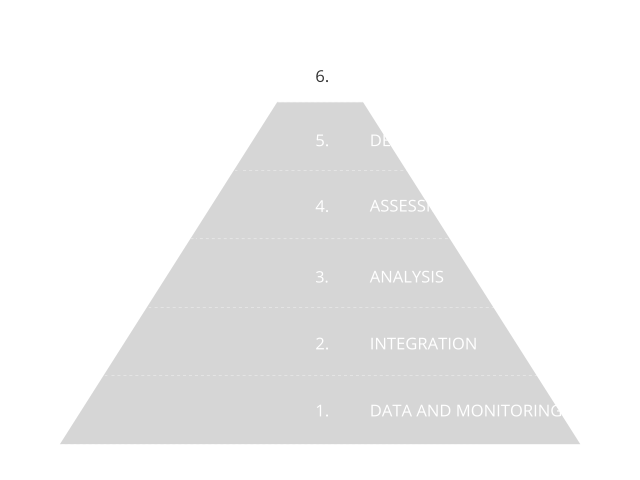
Environmental indicators are based on graphs, maps and assessments and as such present environmental trends in Slovenia. The indicators represent one of the four pillars of our environmental reporting, and are prepared in accordance with the Environmental Protection Act. The Environmental Indicators in Slovenia website enables users to browse among 180 indicators. They are based on numerical data and they indicate the state, characteristics and trends of environmental development in Slovenia. They are prepared using a systematic approach based on data and monitoring, as shown in the information pyramid.

Did you know?

Neutral

Slovenia reported one to two waterborne outbreaks per year during 20142024, except in 2015, 20172020 and 2023-2024, when no outbreaks were reported. Last outbreak was reported in 2022 in the Savinja region, caused by the norovirus genotype GII.6. During 20142024 between 3 and 405 cases were reported. Confirmed causative agents were Cryptosporidium parvum, Escherichia coli, rotavirus, norovirus, Bacillus cereus, Campylobacter jejuni, Salmonella Typhimurium and Francisella tularensis.

Bad

Acidification of forests represents a potential danger only in the non-hydrocarbon part of Slovenia, especially in the east of the country. According to rough estimates, the critical loads occur particularly in the wider area of both major thermals (Zasavje, Celjska kotlina and Šaleška dolina). Excessive eutrophication of forests for deposition from the air does not take looming forest areas in Slovenia.

Bad

According to the state of epiphytic lichens, the preservation of forests and air quality is poor in the entire territory of the Republic of Slovenia, except in forests at higher altitude in the Alps and partially in the Dinaric mountain range.

Neutral

The number of available beds and of overnight stays, in particular, have been growing constantly during the period in question (1992-2009). Tourist bed occupancy rates were highest during the summer months, when the majority of tourists visit seaside tourist resorts, with a slightly smaller share visiting mountain and health resorts. During the winter season, health resorts record the highest number of overnight stays.

Neutral

In 2008, the trend of reducing annual quantities of deposited waste continued both in landfills that are part of public infrastructure as well in landfills operated by the industry. In 2008, 835.3 thousand tonnes of waste were deposited on landfills belonging to public infrastructure and 207.8 thousand tonnes were deposited on landfills operated by industry.