KAZALCI OKOLJA

Environmental indicators in Slovenia


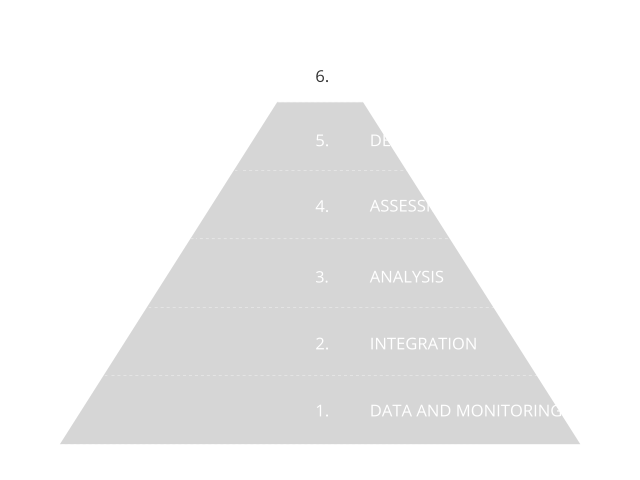
Environmental indicators are based on graphs, maps and assessments and as such present environmental trends in Slovenia. The indicators represent one of the four pillars of our environmental reporting, and are prepared in accordance with the Environmental Protection Act. The Environmental Indicators in Slovenia website enables users to browse among 180 indicators. They are based on numerical data and they indicate the state, characteristics and trends of environmental development in Slovenia. They are prepared using a systematic approach based on data and monitoring, as shown in the information pyramid.

Did you know?

Neutral

Greenhouse gas emissions from agriculture decreased by 20.5% between 1986 and 2023. The largest declines occurred in pig and cattle production and in fertilizer application to agricultural crops. The rapid decline in emissions was typical of the early years of this period until 2013. From 2013 to 2016, emissions increased and then remained at a similar level until 2021, after which they decreased significantly. Slovenia achieved the target in 2023. Compared to 2005, emissions decreased by 7.4%.

Good

In 2023, agriculture accounted for 97.4% of total ammonia emissions. From 1990 to 2024, ammonia emissions in Slovenian agriculture decreased by 31.0% and by 15.7% since 2005. Slovenian agriculture is achieving the overall emissions target set out in the NEC Directive (a gradual reduction of at least 15% by 2030 compared to 2005).

Good
Air

In Slovenia, emissions of persistent organic pollutants (polychlorinated biphenyl, polycyclic aromatic hydrocarbons, hexachlorobenzene, dioxins and furans) decreased between 1990-2023, primarily due to targeted legislation, improved control and use of best available technologies.

Neutral
Air

Emissions of primary particles smaller than 10 µm (PM10), particles smaller than 2.5 µm (PM2.5), and all total suspended particles (TSP) decreased in Slovenia in the period 2000–2023 by 26 %, 36 %, and 11 %, respectively. The main source of particulate matter emissions are households, mainly due to the use of biomass for domestic heating.

Good
Air

Heavy metal emissions in Slovenia significantly decreased between 1990 and 2023. This can be largely attributed to the implementation of the EU legislation, improved surveillance and use of the best available technologies.

Neutral

In the last decades, emissions of air pollutants from transport decreased. However, road transport remains one of the most significant sources of air pollution. In Slovenia in 2023 road transport contributed 40 % to the total emissions of nitrogen oxides. In the period 1990-2023 emissions of substances that cause acidification and emissions of ozone precursors in transport sector declined by 71 % and 76 %. In the period 2000-2023 emissions of particulate matter decreased by 51 %.