KAZALCI OKOLJA

Environmental indicators in Slovenia


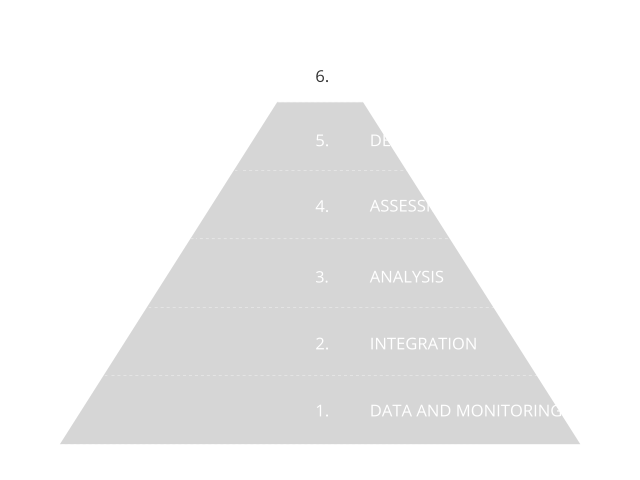
Environmental indicators are based on graphs, maps and assessments and as such present environmental trends in Slovenia. The indicators represent one of the four pillars of our environmental reporting, and are prepared in accordance with the Environmental Protection Act. The Environmental Indicators in Slovenia website enables users to browse among 180 indicators. They are based on numerical data and they indicate the state, characteristics and trends of environmental development in Slovenia. They are prepared using a systematic approach based on data and monitoring, as shown in the information pyramid.

Did you know?

Bad

In Slovenia, the share of one-member households - with higher expenditures and also a greater impact on the environment - has been rapidly increasing in the last ten years. Most households own all the usual household appliances (e.g. washing machine, refrigerator, etc.) and have been rapidly equipping themselves with new ones in recent years; thus electricity consumption does not decrease but increases slightly. Otherwise, most of the electricity is used for space and water heating and cooking. The consumption of electricity for cooling also increased, but decreased for lighting.

Neutral

Groundwater in intergranular aquifers in Slovenia is most affected by nitrate pollution, particularly in northeastern Slovenia. In contrast, groundwater in karst and fissured aquifers is less impacted due to geographical conditions, lower population density, and a smaller proportion of agricultural land.

For the period 2019–2024, poor chemical status was identified in the water bodies of the Savinja, Drava, and Mura basins. The main cause of poor chemical status in all water bodies was nitrate, with atrazine additionally contributing in the Drava basin.

Neutral

In the period 2008–2024, the farmland bird index is 77.1, while the grassland bird index in the agricultural landscape is 58.3. The sixteen-year trend of the farmland bird index shows moderate declining, despite a stable trend over the past ten years.

Bad

Temperature in Slovenia is increasing faster than global average. Increase in the annual average temperature is most evident in the last three decades. Warming of the atmosphere will continue according to the climate change projections. The result of warming is an increase in sea level (due to melting of glaciers and thermal expansion), increase in level of the greenhouse gases in the atmosphere (contributes to warming), and many extreme weather and climate events (like floods, droughts, hail and heavy wind), which will influence the quality of our lives.

Good

Total GHG emissions in the ETS sector recorded an annual decrease for the sixth year in a row. In 2023, they decreased by almost 6% and reached the lowest value in the observed period. The decrease is mainly a result of much lower GHG emissions across all groups, the most in manufacturing industries and construction group. At the EU level, a legally binding target of reducing GHG emissions by 62% by 2030 compared to the 2005 level has been adopted for the ETS sector, which is a common target for the EU and is not further differentiated by member states.

Good

Land areas, prepared for irrigation, have increased from 4,554 ha to 6,414 ha in the period 2000-2024, and their share in total utilized agricultural area from 0.9% to 1.3%. The water consumption per hectare of irrigated land, which strongly depends on weather conditions in each year, has decreased since 2000. Slovenia belongs to the group of EU countries with the smallest share of utilized agricultural area ready for irrigation.