KAZALCI OKOLJA

Environmental indicators in Slovenia


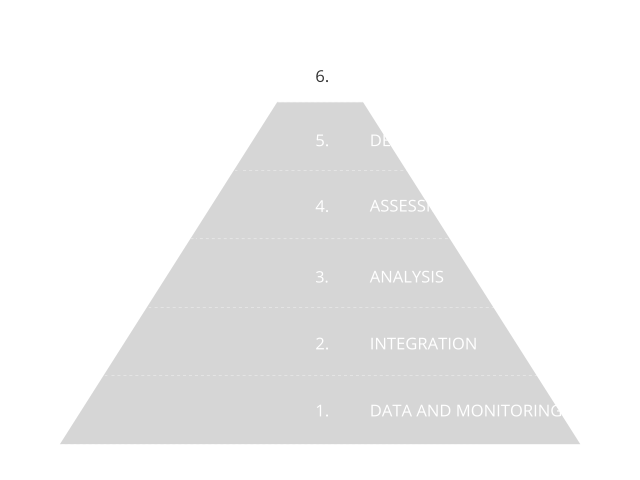
Environmental indicators are based on graphs, maps and assessments and as such present environmental trends in Slovenia. The indicators represent one of the four pillars of our environmental reporting, and are prepared in accordance with the Environmental Protection Act. The Environmental Indicators in Slovenia website enables users to browse among 180 indicators. They are based on numerical data and they indicate the state, characteristics and trends of environmental development in Slovenia. They are prepared using a systematic approach based on data and monitoring, as shown in the information pyramid.

Did you know?

Neutral

The level of household consumption, as well as savings or investments, largely depends on disposable income. It is a fundamental indicator of household material well-being. Household consumption in Slovenia fell significantly during the pandemic in 2020, while disposable income maintained positive growth. A few years later, in 2024, household consumption recorded a 1.6% growth. In the same year, disposable income per capita grew in all statistical regions; the highest in the Osrednjeslovenska region and the lowest in the Pomurska region.

Neutral

Organic matter in soil is an important indicator of the quality of soil. In general, soil in Slovenia is well supplied with organic matter; this is evident from soil map data, which indicate that 86.2% of agricultural land contains more than 2% of organic matter, and 30.9% of land contains more than 4%. The results of laboratory analyses of soil samples taken in 2005 present a similar picture: 88.6% of samples contained more than 2% of organic matter and 37.3% of samples contained more than 4% or organic matter.

Neutral

In Slovenia, alluvial aquifers present 60 % of the drinking water sources, and karst-fractured aquifers present 40 %. Due to populated areas and intensive agricultural production, alluvial aquifers are exposed to greater risks of pollution with nitrates.