KAZALCI OKOLJA

Environmental indicators in Slovenia


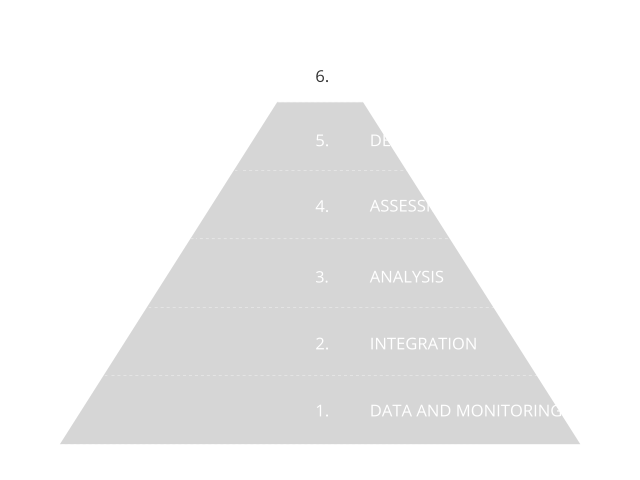
Environmental indicators are based on graphs, maps and assessments and as such present environmental trends in Slovenia. The indicators represent one of the four pillars of our environmental reporting, and are prepared in accordance with the Environmental Protection Act. The Environmental Indicators in Slovenia website enables users to browse among 180 indicators. They are based on numerical data and they indicate the state, characteristics and trends of environmental development in Slovenia. They are prepared using a systematic approach based on data and monitoring, as shown in the information pyramid.

Did you know?

Neutral

By 2024, the implementation of energy efficiency (EE) and renewable energy source (RES) measures in the public sector resulted in a cumulative energy savings of 358 GWh, and the cumulative CO2 emissions reduction was 87 kt. The 2020 target values were only achieved in 2023 and 2022. The gap is largely due to the insufficient intensity of investments in 2016 and 2017. The transition from one financial perspective to the other is expected to be visible also in 2025. No 2030 targets have been set for this indicator.

Neutral

In 2023, EU-27 net GHG emissions decreased by 8.9% compared to 2022 and was 37.3% lower than 1990. In 2023, Slovenian GHG emissions decreased by 4.8% compared to 2022. Emissions from non-ETS sectors were 4.4% lower than in 2022 and by 13.6% % lower than in 2005.

Good

Groundwater in intergranular aquifers in Slovenia is most affected by nitrate pollution, particularly in northeastern Slovenia. In contrast, groundwater in karst and fissured aquifers is less impacted due to geographical conditions, lower population density, and a smaller proportion of agricultural land.

For the period 2019–2024, poor chemical status was identified in the water bodies of the Savinja, Drava, and Mura basins. The main cause of poor chemical status in all water bodies was nitrate, with atrazine additionally contributing in the Drava basin.

Neutral

In 2024, we began reporting on the chemical status of groundwater for a longer six-year period, in line with the reporting cycle under the Water Framework Directive. Based on this assessment, the state adopts measures to improve water quality.

Bad

Temperature in Slovenia is increasing faster than global average. Increase in the annual average temperature is most evident in the last three decades. Warming of the atmosphere will continue according to the climate change projections. The result of warming is an increase in sea level (due to melting of glaciers and thermal expansion), increase in level of the greenhouse gases in the atmosphere (contributes to warming), and many extreme weather and climate events (like floods, droughts, hail and heavy wind), which will influence the quality of our lives.

Neutral

In the period 2008–2024, the farmland bird index is 77.1, while the grassland bird index in the agricultural landscape is 58.3. The sixteen-year trend of the farmland bird index shows moderate declining, despite a stable trend over the past ten years.