KAZALCI OKOLJA

Environmental indicators in Slovenia


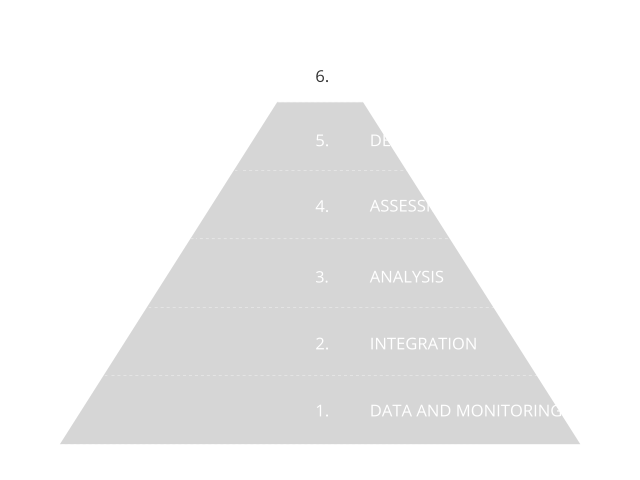
Environmental indicators are based on graphs, maps and assessments and as such present environmental trends in Slovenia. The indicators represent one of the four pillars of our environmental reporting, and are prepared in accordance with the Environmental Protection Act. The Environmental Indicators in Slovenia website enables users to browse among 180 indicators. They are based on numerical data and they indicate the state, characteristics and trends of environmental development in Slovenia. They are prepared using a systematic approach based on data and monitoring, as shown in the information pyramid.

Did you know?

Neutral

Groundwater in intergranular aquifers in Slovenia is most affected by nitrate pollution, particularly in northeastern Slovenia. In contrast, groundwater in karst and fissured aquifers is less impacted due to geographical conditions, lower population density, and a smaller proportion of agricultural land.

For the period 2019–2024, poor chemical status was identified in the water bodies of the Savinja, Drava, and Mura basins. The main cause of poor chemical status in all water bodies was nitrate, with atrazine additionally contributing in the Drava basin.

Good

The quality of inland bathing waters in Slovenia is high, as most are classified as “excellent”, which is better than in the majority of other EU Member States.

Neutral

Nutrient over-enrichment remains the key environmental challenge for lakes and reservoirs in Slovenia. For the assessment period 2014–2019, only 4 of the 11 lake water bodies achieved good or high ecological status. Recent annual data indicate no signs of improvement, and in some lakes total phosphorus concentrations are even rising. The main pressures are linked to human activities, especially inappropriate discharge of municipal wastewater, intensive agriculture in the catchments, and fisheries.

Neutral

The values ​​of the parameters used to monitor the load of rivers with organic substances have decreased significantly since 1996. The observed decrease in organic load corresponds to the increase in the proportion of the population whose wastewater is treated in municipal and joint wastewater treatment plants. The load of rivers with nutrients varies significantly between river basins. The average nitrate values ​​in all river basins of the Danube river basin are higher than in the Soča and Adriatic river basins and above the values of the natural background.

Neutral

The value of agricultural output in Slovenia fluctuates in the period 1995–2024, which can be a consequence of fluctuation of changes in prices of agricultural products, changes in the volume of agricultural production or combination of both. In the recent period, the key factors have been large fluctuations in the physical volume (and consequently the value) of agricultural production, especially in crop production. In recent years, there have been intense fluctuations in crop prices and prices of agricultural inputs.

Bad

In Slovenia, the majority of food is estimated to be imported. Before 2004, less than half of all available food came from abroad, but both food imports and exports increased significantly after Slovenia’s accession to the EU. The share of imported food has since continued to grow, and after 2020, less than one-fifth of the available food was of domestic origin. Most of the food Slovenia imports comes from European Union Member States, with about 60% originating from neighbouring countries (Austria, Croatia, Italy, and Hungary).