KAZALCI OKOLJA

Environmental indicators in Slovenia


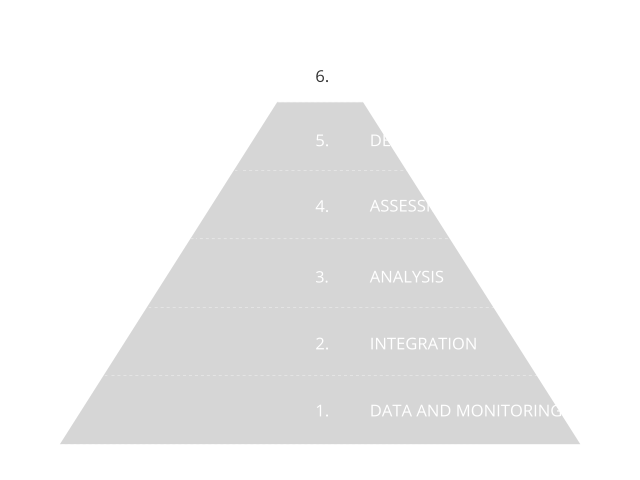
Environmental indicators are based on graphs, maps and assessments and as such present environmental trends in Slovenia. The indicators represent one of the four pillars of our environmental reporting, and are prepared in accordance with the Environmental Protection Act. The Environmental Indicators in Slovenia website enables users to browse among 180 indicators. They are based on numerical data and they indicate the state, characteristics and trends of environmental development in Slovenia. They are prepared using a systematic approach based on data and monitoring, as shown in the information pyramid.

Did you know?

Neutral

By 2024, the implementation of energy efficiency (EE) and renewable energy source (RES) measures in the public sector resulted in a cumulative energy savings of 358 GWh, and the cumulative CO2 emissions reduction was 87 kt. The 2020 target values were only achieved in 2023 and 2022. The gap is largely due to the insufficient intensity of investments in 2016 and 2017. The transition from one financial perspective to the other is expected to be visible also in 2025. No 2030 targets have been set for this indicator.

Bad

Households in lower income classes self-assess their health status worse than households in higher income classes, but in general, the self-assessment of the health status of Slovenian residents is relatively high. In 2019, a good third of adults in Slovenia (from 18 to 64 years inclusive) were overweight and almost a fifth were obese. Obesity is increasing, which is on the rise among the oldest, but also among children.

Bad

Slovenians are big meat lovers. Data for 2021 show that we eat a lot of meat (all types of meat are included here), 89.28 kg per capita; the European average is 69.3 kg. We are also big consumers of eggs, with which we are almost self-sufficient, while fish consumption is modest and declining. However, the amount of food waste should not be neglected. A resident of Slovenia threw away an average of 72 kg of food in 2021, and most food waste is generated in households.

Bad

The eco-innovation index shows the performance of individual Member States in the various components of eco-innovation compared to the EU average, and presents their strengths and weaknesses. The overall Eco-innovation Index 2019 for Slovenia is 94, placing Slovenia on 15th rank and below the EU average. Slovenia composite index has significantly deteriorated compared to 2017, when it was at 115; placing Slovenia just behind the leading eco-innovative countries.

Bad

Almost all Slovenian households have a washing machine and refrigerator, and they posses more and more dishwashers, dryers and microwaves. While, on the one hand, the consumption of electricity and other resources is reduced due to rapid and exceptional technological improvements (such as smart appliances), it is also increasing the number of these appliances in households, which negates the achievements in efficient use of resources. This is usually referred to as the "Rebound effect".

Good

One of the main sources of greenhouse gas emissions in Slovenia is road traffic, as passenger vehicles contribute as much as 20 % of all greenhouse gas emissions. It is estimated that, due to the smaller role of public passenger transport in Slovenia, it is necessary to achieve as much as 2/3 reduction of GHG emissions by electrifying the vehicle fleet, which dictates the replacement of existing vehicles with fossil fuels. with electric vehicles (battery and plug-in hybrids EV).