KAZALCI OKOLJA

Environmental indicators in Slovenia


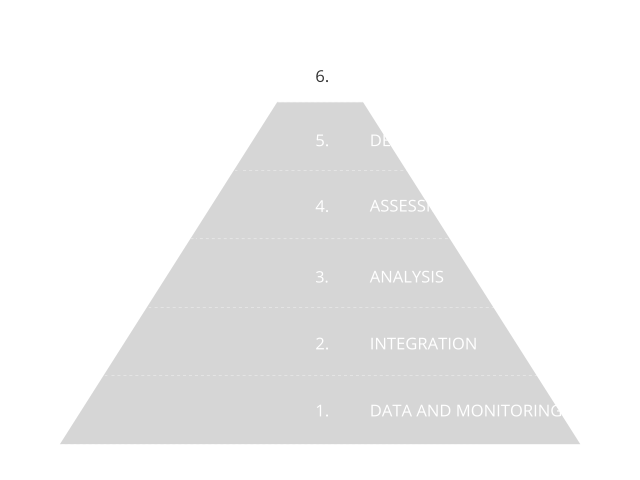
Environmental indicators are based on graphs, maps and assessments and as such present environmental trends in Slovenia. The indicators represent one of the four pillars of our environmental reporting, and are prepared in accordance with the Environmental Protection Act. The Environmental Indicators in Slovenia website enables users to browse among 180 indicators. They are based on numerical data and they indicate the state, characteristics and trends of environmental development in Slovenia. They are prepared using a systematic approach based on data and monitoring, as shown in the information pyramid.

Did you know?

Bad

Collected quantities of organic kitchen waste more than doubled after the implementation of the regulation, but its management has so far failed to achieve the set objectives. Deficiencies are particularly evident in composting. About 3,000 tonnes of such waste were composted in 2007, but so far only one entity obtained the environmental permit required for this activity.

Neutral

Various measures have been taken that waste is destined for recovery, giving priority to recycling and preparation for reuse. Data on waste generation and management is being collected to monitor their implementation.

Good

In Slovenia, the share of landfilled municipal waste in 2022, based on all generated municipal waste, was 8.8% or slightly more than 90,000 tonnes. Thus the goal of reducing the amount of municipal waste landfilled to 10% or less by weight of all generated municipal waste by 2035 has already been achieved. The waste was landfilled at 9 non-hazardous waste landfills.

Neutral

In the period 2008–2024, the farmland bird index is 77.1, while the grassland bird index in the agricultural landscape is 58.3. The sixteen-year trend of the farmland bird index shows moderate declining, despite a stable trend over the past ten years.

Bad

Temperature in Slovenia is increasing faster than global average. Increase in the annual average temperature is most evident in the last three decades. Warming of the atmosphere will continue according to the climate change projections. The result of warming is an increase in sea level (due to melting of glaciers and thermal expansion), increase in level of the greenhouse gases in the atmosphere (contributes to warming), and many extreme weather and climate events (like floods, droughts, hail and heavy wind), which will influence the quality of our lives.

Good

Total GHG emissions in the ETS sector recorded an annual decrease for the sixth year in a row. In 2023, they decreased by almost 6% and reached the lowest value in the observed period. The decrease is mainly a result of much lower GHG emissions across all groups, the most in manufacturing industries and construction group. At the EU level, a legally binding target of reducing GHG emissions by 62% by 2030 compared to the 2005 level has been adopted for the ETS sector, which is a common target for the EU and is not further differentiated by member states.