KAZALCI OKOLJA

Environmental indicators in Slovenia


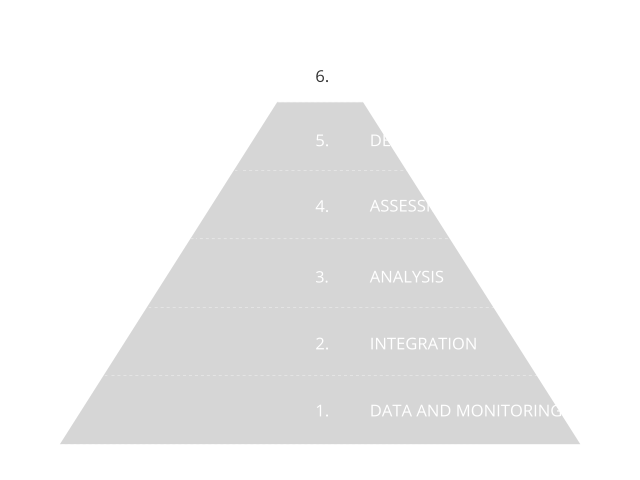
Environmental indicators are based on graphs, maps and assessments and as such present environmental trends in Slovenia. The indicators represent one of the four pillars of our environmental reporting, and are prepared in accordance with the Environmental Protection Act. The Environmental Indicators in Slovenia website enables users to browse among 180 indicators. They are based on numerical data and they indicate the state, characteristics and trends of environmental development in Slovenia. They are prepared using a systematic approach based on data and monitoring, as shown in the information pyramid.

Did you know?

Neutral

Energy efficiency in transport is improving, but too slowly, as it improved by only 11% in the period 2000-2019. Most of the energy in traffic is consumed in passenger cars, where efficiency has deteriorated.

In households, energy efficiency improved by 33% over the same period, mainly due to an improvement in energy efficiency for heating. Most energy in households is used to heat homes.

Bad

Lyme borreliosis (LB) and tick-borne encephalitis (TBE) are the most common vector-borne diseases transmitted by ticks. Between 2014 and 2023, Slovenia reported annually slightly less than 3,000 to over 7,000 cases of LB and an average of 105 TBE cases (the highest in 2020 - 187 cases, the lowest in 2015 and 2021 - 62 cases). Due to climate change, which influences the expansion of tick habitats and extends their activity season, the risk of infection may increase in the future. Increased awareness and individual prevention are key factors in reducing the burden of both diseases.

Good

The phosphorus (P) budget in agriculture decreased by 109 % in the period 1992–2024. The decline is the result of a decreased P intake with mineral and livestock fertilizers, as well as the consequence of increased P uptake by agricultural crops. The period up to 2003 was characterized by a surplus of 11 to 16 kg per hectare. Thereafter, the surpluses decreased and reached an average value of +0.4 kg P per hectare in the last five-year period. A realistic comparison of the surplus with other EU Member States is not possible.

Neutral

In Slovenia, we cultivate slightly more than 8 acres (0.08 hectares) of arable land per capita, which more than third of the average in the European Union (EU), which is 22 acres of arable land per capita (data for year 2023). This area did not change significantly between 2000 and 2023, which indicates that Slovenia maintains its production potential.

Neutral

Overall, the data confirm a clear distribution of carbon stocks by land use: organic/peat-influenced soils and uses with permanent vegetation cover (peatland meadows, permanent grasslands, tree- and shrub-dominated vegetation) reach the highest stocks (approximately 105–190 t/ha, with peatlands at the top). These are followed by extensive orchards (around 100 t/ha), while intensive orchards and vineyards remain in the lower range (approximately 59–94 t/ha). Arable land falls within the medium range, but shows signs of an increase after 2020 (113.3 t/ha).

Neutral

In the period 2022–2024, the share of agricultural land decreased by 0.3 %. The most significant declines were observed in overgrown agricultural area, arable land, and vineyards, while increases occurred in grasslands, less present agricultural land uses, and uncultivated agricultural land. A positive development during this period was the increase in the share of grasslands (permanent and wet grasslands), which may indicate a gradual restoration of agricultural landscape. Slovenia remains well bellow both the European and global averages in terms of arable land per capita.