KAZALCI OKOLJA

Environmental indicators in Slovenia


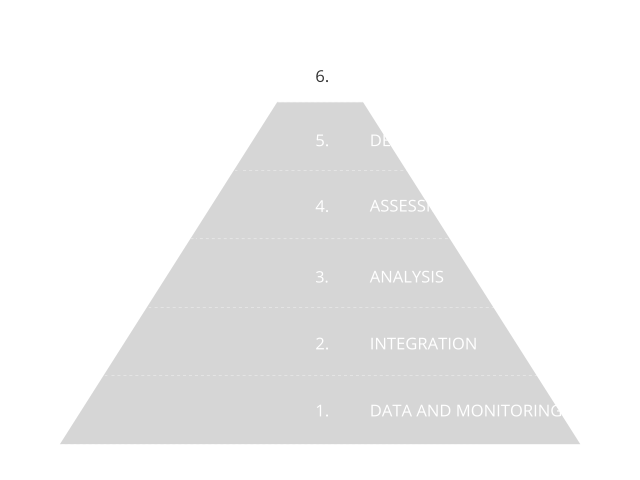
Environmental indicators are based on graphs, maps and assessments and as such present environmental trends in Slovenia. The indicators represent one of the four pillars of our environmental reporting, and are prepared in accordance with the Environmental Protection Act. The Environmental Indicators in Slovenia website enables users to browse among 180 indicators. They are based on numerical data and they indicate the state, characteristics and trends of environmental development in Slovenia. They are prepared using a systematic approach based on data and monitoring, as shown in the information pyramid.

Did you know?

Neutral

In the period 2022–2024, the share of agricultural land decreased by 0.3 %. The most significant declines were observed in overgrown agricultural area, arable land, and vineyards, while increases occurred in grasslands, less present agricultural land uses, and uncultivated agricultural land. A positive development during this period was the increase in the share of grasslands (permanent and wet grasslands), which may indicate a gradual restoration of agricultural landscape. Slovenia remains well bellow both the European and global averages in terms of arable land per capita.

Good

In 2022, 75% of energy supply in Slovenia was available to end-users, marking the highest level observed in the period. This percentage is largely influenced by the efficiency of electricity and heat production. In thermoelectric power plants and combined heat and power plants, almost half of the input energy was lost in 2022. Compared to the EU-27 countries, Slovenia ranked in the lower third. Electricity production from combined heat and power plants accounted for just over 6% of total production in Slovenia in 2021, with this share declining in recent years.

Neutral

The average concentrations of dioxins and dl-PCBs in fish and seafood are the highest among all foods, followed by other animal-derived foods. Long-term average exposure of the Slovenian population to dioxins due to fish consumption does not exceed the Tolerable Weekly Intake (TWI), except for infants and toddlers, indicating a higher health risk for the most vulnerable groups. When considering only fish consumers, exposure to dioxins and PCBs exceeds the TWI in all age groups.

Neutral

The data for Slovenia shows that in the past five years, one infant died due to respiratory diseases, specifically in 2021, representing 11.1% of all infant deaths in that year. Research has indicated that air pollution is associated with higher infant mortality rates due to respiratory diseases. However, this relationship is complex, as it is also influenced by other factors such as the presence of allergens, exposure to cigarette smoke, diet, and lifestyle.

Neutral

The year 2022 was exceptional for electricity production in Slovenia, as difficulties with coal supplies led to the lowest production from solid fuels since 1992, and drought also reduced production from renewable energy sources. This resulted in a record share of nuclear energy in electricity production (42%) and very low total production (13.4 TWh), the lowest since 1999. The share of domestic electricity production was 71%, below the target set in the National Energy and Climate Plan, and the annual production was 40% lower than the gross consumption.

Good

Although electricity and heat generation increased by 30% between 1990 and 2021, CO2 emissions decreased by 31.5%, mainly due to the increase in generation efficiency, as well as to the increase in RES and nuclear generation. SO2 emissions decreased by almost 99%, mainly due to the installation of desulphurisation, the increase in generation efficiency and share of RES and nuclear generation.