KAZALCI OKOLJA

Environmental indicators in Slovenia


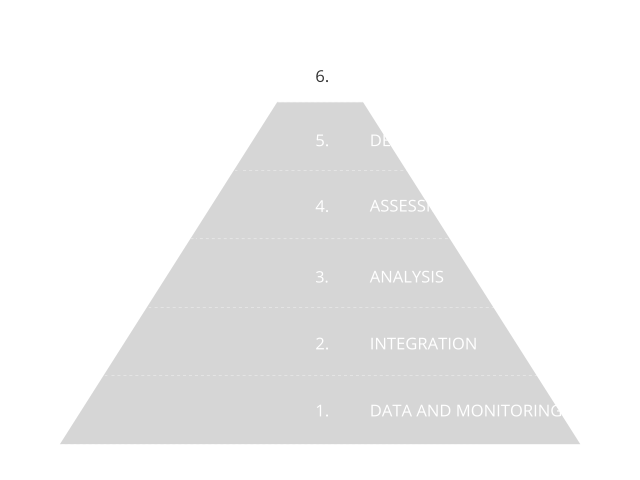
Environmental indicators are based on graphs, maps and assessments and as such present environmental trends in Slovenia. The indicators represent one of the four pillars of our environmental reporting, and are prepared in accordance with the Environmental Protection Act. The Environmental Indicators in Slovenia website enables users to browse among 180 indicators. They are based on numerical data and they indicate the state, characteristics and trends of environmental development in Slovenia. They are prepared using a systematic approach based on data and monitoring, as shown in the information pyramid.

Did you know?

Bad

In Slovenia, the majority of food is estimated to be imported. Before 2004, less than half of all available food came from abroad, but both food imports and exports increased significantly after Slovenia’s accession to the EU. The share of imported food has since continued to grow, and after 2020, less than one-fifth of the available food was of domestic origin. Most of the food Slovenia imports comes from European Union Member States, with about 60% originating from neighbouring countries (Austria, Croatia, Italy, and Hungary).

Bad

Final energy consumption in buildings amounted to 1,477 ktoe in 2023 and was 4% lower than the indicative target value from the National Energy and Climate Plan from 2020 (NECP 2020). Compared to the previous year, it remained at approximately the same level, and compared to 2005, it decreased by 23%. Greenhouse gas (GHG) emissions in buildings amounted to 1,024 kt CO2 eq. in 2023, thus the indicative target value, which is the same in the NECP 2020 and in its update from 2024 (NECO 2024) was not achieved.

Neutral

In 2023, EU-27 net GHG emissions decreased by 8.9% compared to 2022 and was 37.3% lower than 1990. In 2023, Slovenian GHG emissions decreased by 4.8% compared to 2022. Emissions from non-ETS sectors were 4.4% lower than in 2022 and by 13.6% % lower than in 2005.

Neutral

In 2024, we began reporting on the chemical status of groundwater for a longer six-year period, in line with the reporting cycle under the Water Framework Directive. Based on this assessment, the state adopts measures to improve water quality.

Neutral

Groundwater in intergranular aquifers in Slovenia is most affected by nitrate pollution, particularly in northeastern Slovenia. In contrast, groundwater in karst and fissured aquifers is less impacted due to geographical conditions, lower population density, and a smaller proportion of agricultural land.

For the period 2019–2024, poor chemical status was identified in the water bodies of the Savinja, Drava, and Mura basins. The main cause of poor chemical status in all water bodies was nitrate, with atrazine additionally contributing in the Drava basin.

Good

In Slovenia, the share of landfilled municipal waste in 2022, based on all generated municipal waste, was 8.8% or slightly more than 90,000 tonnes. Thus the goal of reducing the amount of municipal waste landfilled to 10% or less by weight of all generated municipal waste by 2035 has already been achieved. The waste was landfilled at 9 non-hazardous waste landfills.