KAZALCI OKOLJA

Environmental indicators in Slovenia


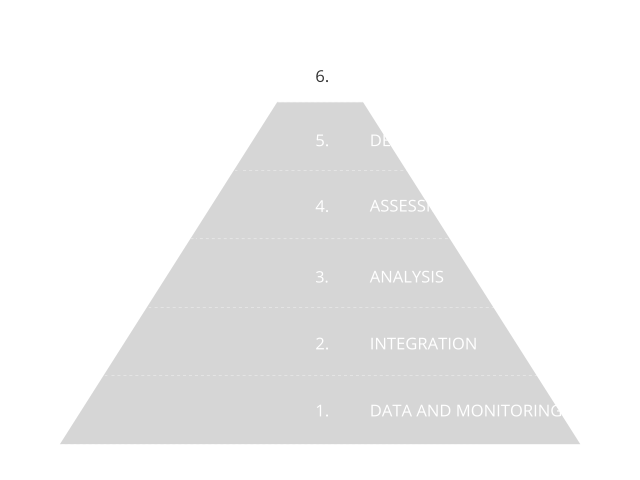
Environmental indicators are based on graphs, maps and assessments and as such present environmental trends in Slovenia. The indicators represent one of the four pillars of our environmental reporting, and are prepared in accordance with the Environmental Protection Act. The Environmental Indicators in Slovenia website enables users to browse among 180 indicators. They are based on numerical data and they indicate the state, characteristics and trends of environmental development in Slovenia. They are prepared using a systematic approach based on data and monitoring, as shown in the information pyramid.

Did you know?

Neutral

Population trends of selected bird species show that the state of the environment in the cultural landscape is still deteriorating, especially in some parts such as Prekmurje and Ljubljansko barje. The population of selected forest bird species is stable, however, a trend of deterioration of its habitat was recorded in recent years, as a result of intensified logging. Bird populations that winter on Slovenian rivers and other water bodies have different trends that are mostly in line with trends of regional biogeographic populations of waterbirds in Europe.

Good

In 2023, agriculture accounted for 97.4% of total ammonia emissions. From 1990 to 2024, ammonia emissions in Slovenian agriculture decreased by 31.0% and by 15.7% since 2005. Slovenian agriculture is achieving the overall emissions target set out in the NEC Directive (a gradual reduction of at least 15% by 2030 compared to 2005).

Good
Air

Heavy metal emissions in Slovenia significantly decreased between 1990 and 2023. This can be largely attributed to the implementation of the EU legislation, improved surveillance and use of the best available technologies.

Neutral

In the last decades, emissions of air pollutants from transport decreased. However, road transport remains one of the most significant sources of air pollution. In Slovenia in 2023 road transport contributed 40 % to the total emissions of nitrogen oxides. In the period 1990-2023 emissions of substances that cause acidification and emissions of ozone precursors in transport sector declined by 71 % and 76 %. In the period 2000-2023 emissions of particulate matter decreased by 51 %.

Good

In Slovenia, slightly more than 106,000 tonnes of municipal waste were landfilled at 10 non-hazardous waste landfills in 2023, compared to slightly more than 90,000 tonnes the year before. The increase in landfilled municipal waste in 2023 was the result of the extensive floods that hit Slovenia during the summer of that year.

The share of landfilled municipal waste at the EU level in 2023 was 22% of generated municipal waste. The countries in which more than half of generated municipal waste was landfilled include Greece, Romania, Malta, Cyprus, Portugal, Hungary, and Bulgaria.

Neutral

In Slovenia, just over 1.1 million tonnes of municipal waste were generated in 2023, which is 7 % more than the previous year, of which 69 % was collected separately. 26 % of municipal waste generated was packaging waste. In 2023, more than 294.000 tonnes of packaging waste were generated in Slovenia, of which more than one fifth was plastic packaging waste.