KAZALCI OKOLJA

Environmental indicators in Slovenia


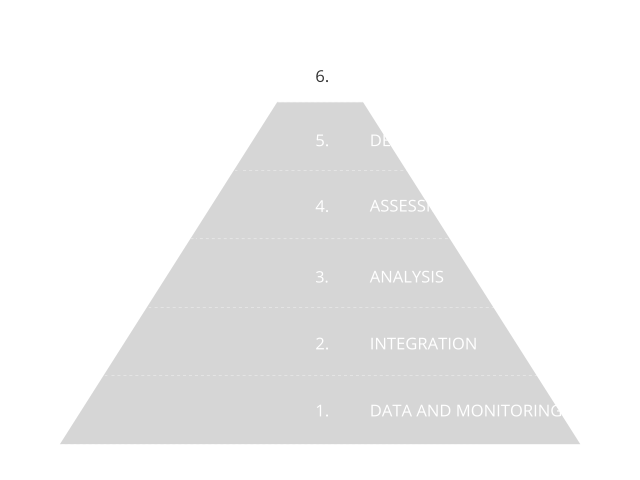
Environmental indicators are based on graphs, maps and assessments and as such present environmental trends in Slovenia. The indicators represent one of the four pillars of our environmental reporting, and are prepared in accordance with the Environmental Protection Act. The Environmental Indicators in Slovenia website enables users to browse among 180 indicators. They are based on numerical data and they indicate the state, characteristics and trends of environmental development in Slovenia. They are prepared using a systematic approach based on data and monitoring, as shown in the information pyramid.

Did you know?

Bad

The average age of the passenger car fleet in Slovenia has been steadily increasing; over the past thirty years, it has risen by almost four years — from 6.8 years in 1992 to 11.1 years in 2023. Over the past two decades, the share of cars older than 12 years has been continuously growing, by around 50% each decade. At the same time, the share of cars less than three years old has been steadily declining — by roughly 30% per decade.

Good

The decrease in SO2 emissions from transport is significantly influenced by the tightening of legislation governing the concentration of sulphur in liquid fuels (since 2009, it has been limited to 10 mg/kg for both petrol and diesel). The limit value of concentration of sulphur in fuels used in road transport in 2015 was not exceeded in Slovenia or in the EU-28; the same applies to air and maritime transport.

Neutral

The limit value for environmental noise for playgrounds (55dB(A)) determined by the WHO was exceeded at the most exposed facade at 12 primary schools. However none of 34 kindergartens and 22 primary schools was exposed to excess noise limit at all four facades. There were 4,097 pupils in 12 schools and 2,909 children in 24 kindergartens where the high noise levels at most exposed facades were determined in the school year 2013/2014.

Good

Most of industrial energy is consumed in the production of metals. In the period 2008-2012, the efficiency of energy use has increased, while the trends in individual sectors are very different and diverse.