KAZALCI OKOLJA

Environmental indicators in Slovenia


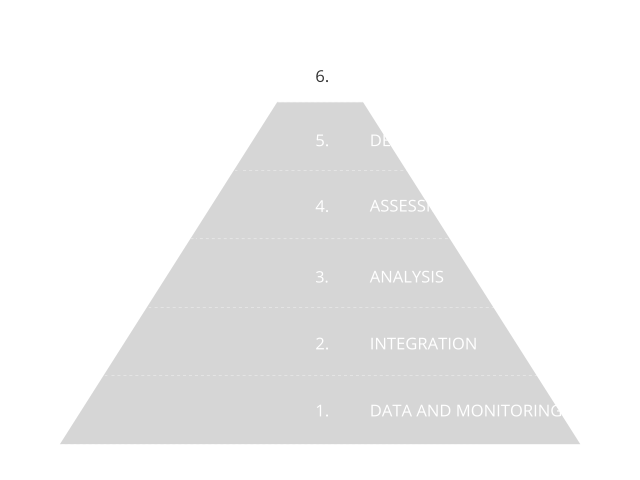
Environmental indicators are based on graphs, maps and assessments and as such present environmental trends in Slovenia. The indicators represent one of the four pillars of our environmental reporting, and are prepared in accordance with the Environmental Protection Act. The Environmental Indicators in Slovenia website enables users to browse among 180 indicators. They are based on numerical data and they indicate the state, characteristics and trends of environmental development in Slovenia. They are prepared using a systematic approach based on data and monitoring, as shown in the information pyramid.

Did you know?

Bad

In Slovenia, the majority of food is estimated to be imported. Before 2004, less than half of all available food came from abroad, but both food imports and exports increased significantly after Slovenia’s accession to the EU. The share of imported food has since continued to grow, and after 2020, less than one-fifth of the available food was of domestic origin. Most of the food Slovenia imports comes from European Union Member States, with about 60% originating from neighbouring countries (Austria, Croatia, Italy, and Hungary).

Good

The collected quantities of health-care waste increased after the adoption of the regulation governing this waste. Collected quantities of waste medicines are also expected to increase, since collection in pharmacies was introduced at the end of 2009.

Good

The majority of waste edible oil is exported to other EU Member States for recycling into biodiesel. According to the official records of the Environmental Agency of the Republic of Slovenia, there is no industrial biodiesel production from waste edible oils in Slovenia.

Neutral

Organic matter in soil is an important indicator of the quality of soil. In general, soil in Slovenia is well supplied with organic matter; this is evident from soil map data, which indicate that 86.2% of agricultural land contains more than 2% of organic matter, and 30.9% of land contains more than 4%. The results of laboratory analyses of soil samples taken in 2005 present a similar picture: 88.6% of samples contained more than 2% of organic matter and 37.3% of samples contained more than 4% or organic matter.

Neutral

In Slovenia, alluvial aquifers present 60 % of the drinking water sources, and karst-fractured aquifers present 40 %. Due to populated areas and intensive agricultural production, alluvial aquifers are exposed to greater risks of pollution with nitrates.