KAZALCI OKOLJA

Environmental indicators in Slovenia


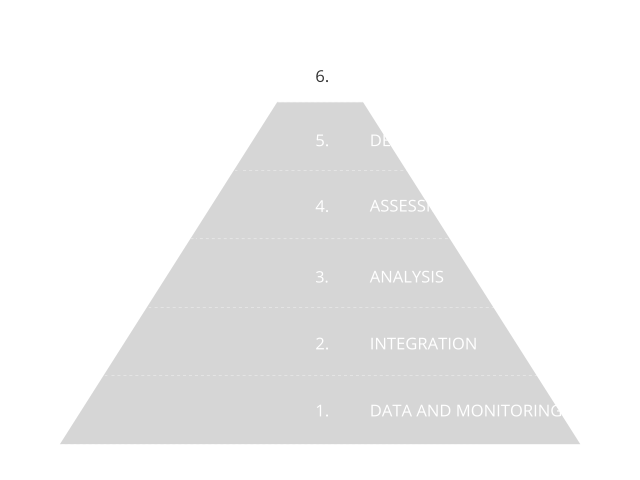
Environmental indicators are based on graphs, maps and assessments and as such present environmental trends in Slovenia. The indicators represent one of the four pillars of our environmental reporting, and are prepared in accordance with the Environmental Protection Act. The Environmental Indicators in Slovenia website enables users to browse among 180 indicators. They are based on numerical data and they indicate the state, characteristics and trends of environmental development in Slovenia. They are prepared using a systematic approach based on data and monitoring, as shown in the information pyramid.

Did you know?

Bad

In Slovenia, the majority of food is estimated to be imported. Before 2004, less than half of all available food came from abroad, but both food imports and exports increased significantly after Slovenia’s accession to the EU. The share of imported food has since continued to grow, and after 2020, less than one-fifth of the available food was of domestic origin. Most of the food Slovenia imports comes from European Union Member States, with about 60% originating from neighbouring countries (Austria, Croatia, Italy, and Hungary).

Bad

The number of inhabitants who live in the impact area of major roads and railways in Ljubljana and are exposed to high noise levels did not change significantly between 2012 and 2017, and is not decreasing in accordance with the set objectives.

Neutral

The number of inhabitants who live in the impact area of major roads outside urban areas has decreased. In 2017, around 16,000 fewer inhabitants were exposed to high noise levels throughout the day and during the night compared to 2012. In urban areas, the number of inhabitants who are exposed to road traffic noise has not decreased. The number of inhabitants who are exposed to high noise levels throughout the day has remained at the same level as in 2012 and is estimated at 64,000.

Neutral

In 2021 the Water Rights for special use of water were issued in 8385 acts (water permits, concessions), with additional more than 10.000 cases of minor spatial water uses with neglectable influence on state of water, were in the process of evidencing in the Water Book.

Neutral

Systematic research on soil pollution shows that soils in Slovenia, with some exceptions, are not heavily polluted. In 42% of top soil samples taken in the period from 1999 to 2019, no exceedances of the limit values of dangerous substances into the soil were detected. In 56% of the samples the limit values of inorganic pollutants were exceeded and in 5% the limit values of organic pollutants. The most polluted areas with inorganic pollutants were Jesenice, Idrija, the Celje Basin and the Upper Mežica Valley.

Neutral

Air pollution is the most important environmental risk factor for human health, affecting an average of 400,000 premature deaths in the EU and costing Europeans an average of more than € 166 billion a year. In the case of the cities of Ljubljana and Maribor, external costs amount to almost EUR 271 million annually. Estimation of external costs of air pollution from transport is slightly decreasing.