KAZALCI OKOLJA

Environmental indicators in Slovenia


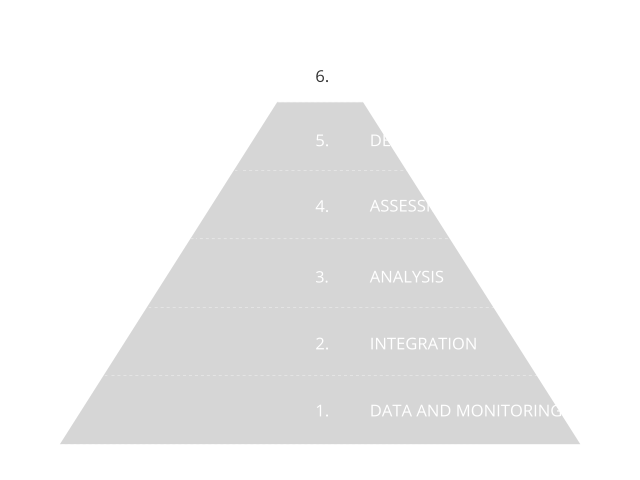
Environmental indicators are based on graphs, maps and assessments and as such present environmental trends in Slovenia. The indicators represent one of the four pillars of our environmental reporting, and are prepared in accordance with the Environmental Protection Act. The Environmental Indicators in Slovenia website enables users to browse among 180 indicators. They are based on numerical data and they indicate the state, characteristics and trends of environmental development in Slovenia. They are prepared using a systematic approach based on data and monitoring, as shown in the information pyramid.

Did you know?

Bad

The favorable conservation status of habitat types in Slovenia is reached by just over a third of Europe's important habitat types.In order to achieve the objectives of the EU Biodiversity Strategy, it is necessary to follow the guidelines of the Regulation on Special Conservation Areas (Natura 2000 sites) more rigorously and to implement the Natura 2000 management program. This is especially important for areas with freshwater, wetland, wetland and grassland habitat types.

Neutral

In 2021 the Water Rights for special use of water were issued in 8385 acts (water permits, concessions), with additional more than 10.000 cases of minor spatial water uses with neglectable influence on state of water, were in the process of evidencing in the Water Book.

Neutral

Air pollution is the most important environmental risk factor for human health, affecting an average of 400,000 premature deaths in the EU and costing Europeans an average of more than € 166 billion a year. In the case of the cities of Ljubljana and Maribor, external costs amount to almost EUR 271 million annually. Estimation of external costs of air pollution from transport is slightly decreasing.

Good

Plans to improve air quality in Slovenia include a number of measures. It is crucial that the state ensures the financing of measures and thus the implementation of measures, and consequently the improvement of ambient air quality. In 2019, as much as EUR 15.56 million more investments were paid out than in 2014. In the period from 2014 to 2019, most investments were in wood biomass boilers, followed by investments in heat pumps.

Bad

The total renewable amount of groundwater in shallow aquifers in Slovenia in the hydrological year 2019 was below the average of the comparative hydrological water balance period 1981-2010.

Bad

Energy consumption in transport has been declining slightly in recent years. This is due to combination of lower domestic vehicle consumption as well as lower sales to foreign vehicles. Most of the energy is used in road transport. Consumption of diesel fuel in road transport is increasing.