KAZALCI OKOLJA

Environmental indicators in Slovenia


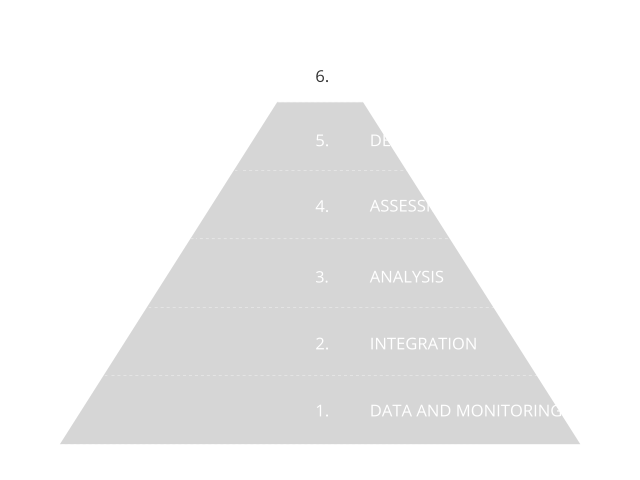
Environmental indicators are based on graphs, maps and assessments and as such present environmental trends in Slovenia. The indicators represent one of the four pillars of our environmental reporting, and are prepared in accordance with the Environmental Protection Act. The Environmental Indicators in Slovenia website enables users to browse among 180 indicators. They are based on numerical data and they indicate the state, characteristics and trends of environmental development in Slovenia. They are prepared using a systematic approach based on data and monitoring, as shown in the information pyramid.

Did you know?

Good

Greenhouse gas (GHG) emissions due to land-use change generally show a declining trend. In 2023, GHG emissions from deforestation decreased by 1.5% compared to the previous year, with more than half, i.e. 62%, of these emissions coming from the establishment of agricultural land. GHG emissions due to land conversion to built-up and related land decreased by 2.7% compared to the previous year. The largest share of emissions (75%) is due to the conversion of agricultural land to built-up and related land.

Bad

In most aquifers in Slovenia, levels of plant protection products and their degradation products (metabolites) indicate a decreasing trend, which is mainly due to the decreased concentrations of atrazine and its metabolite desethylatrazine. The number of individual active substances and their degradation products exceeding the 0.1 µg/l threshold value for individual active substances is also decreasing.