KAZALCI OKOLJA

Environmental indicators in Slovenia


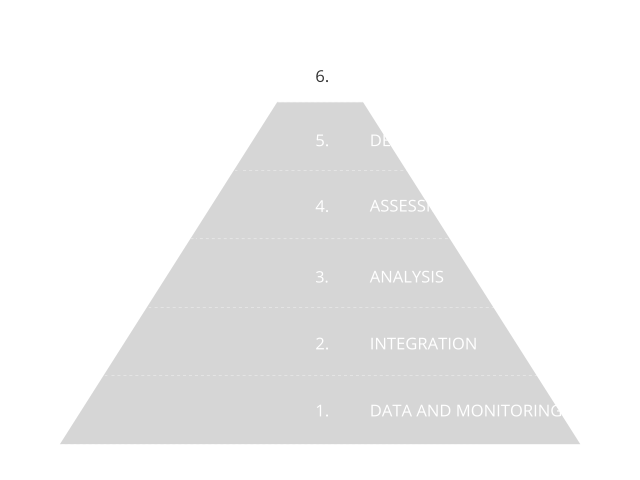
Environmental indicators are based on graphs, maps and assessments and as such present environmental trends in Slovenia. The indicators represent one of the four pillars of our environmental reporting, and are prepared in accordance with the Environmental Protection Act. The Environmental Indicators in Slovenia website enables users to browse among 180 indicators. They are based on numerical data and they indicate the state, characteristics and trends of environmental development in Slovenia. They are prepared using a systematic approach based on data and monitoring, as shown in the information pyramid.

Did you know?

Bad
Air

The level of air pollution with ozone has exceeded the target value for protecting human health in recent years at some urban background monitoring stations (Koper, Nova Gorica Grčna) and at the higher-altitude monitoring station Otlica. The long-term health protection goals have been exceeded at all monitoring stations. The warning value has also been exceeded in recent years only in the Primorska region and at higher altitudes, such as Otlica.

Good

The majority of waste edible oil is exported to other EU Member States for recycling into biodiesel. According to the official records of the Environmental Agency of the Republic of Slovenia, there is no industrial biodiesel production from waste edible oils in Slovenia.

Bad

Collected quantities of organic kitchen waste more than doubled after the implementation of the regulation, but its management has so far failed to achieve the set objectives. Deficiencies are particularly evident in composting. About 3,000 tonnes of such waste were composted in 2007, but so far only one entity obtained the environmental permit required for this activity.

Neutral

Organic matter in soil is an important indicator of the quality of soil. In general, soil in Slovenia is well supplied with organic matter; this is evident from soil map data, which indicate that 86.2% of agricultural land contains more than 2% of organic matter, and 30.9% of land contains more than 4%. The results of laboratory analyses of soil samples taken in 2005 present a similar picture: 88.6% of samples contained more than 2% of organic matter and 37.3% of samples contained more than 4% or organic matter.

Neutral

In Slovenia, alluvial aquifers present 60 % of the drinking water sources, and karst-fractured aquifers present 40 %. Due to populated areas and intensive agricultural production, alluvial aquifers are exposed to greater risks of pollution with nitrates.