KAZALCI OKOLJA

Environmental indicators in Slovenia


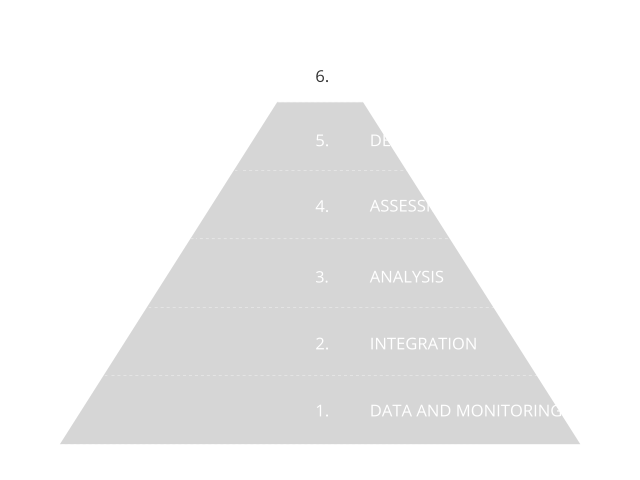
Environmental indicators are based on graphs, maps and assessments and as such present environmental trends in Slovenia. The indicators represent one of the four pillars of our environmental reporting, and are prepared in accordance with the Environmental Protection Act. The Environmental Indicators in Slovenia website enables users to browse among 180 indicators. They are based on numerical data and they indicate the state, characteristics and trends of environmental development in Slovenia. They are prepared using a systematic approach based on data and monitoring, as shown in the information pyramid.

Did you know?

Good
Air

Emissions of total ozone precursors in Slovenia decreased by 62 % in the period 1990 to 2021. Emissions of nitrogen oxides decreased by 66 %, carbon monoxide by 70 %, non-methane volatile organic compounds by 54 % and methane by 26 %. The reason is mainly the introduction of more stringent emission standards for motor vehicles. This measure contributed to a significant reduction in emissions of nitrogen oxides and carbon dioxide from road transport which is the main source of ozone precursors.

Bad

With the increasing share of electric passenger vehicles, CO2 emissions decreased in 2022 and 2023, but increased slightly in 2024 compared to the previous year due to the decrease in the share. The gap to the target value is almost 34%.

The average emissions of all passenger vehicles increased in 2022 compared to the previous year. In 2023, the average emissions decreased back to approximately the level of 2021. The target values were not achieved.

Good

In 2023, energy efficient district heating (DH) systems, i.e. systems that meet one of the criteria defined in Article 50 of the Act on Energy Efficiency, produced 87,7% of all heat in DO systems, which is the highest value in the observed period. The total share of heat from renewable energy sources (RES) and waste heat amounted to 21,2% in 2023. It increased by 0.5 percentage points compared to the previous year, and by 5.5 percentage points compared to 2016.

Good

According to the data for 2023, GHG emissions per unit of electricity produced amounted to 166 gCO2/kWh. In the period 1992–2023, the intensity of GHG emissions decreased by 62,4%. Compared to the EU-27 average, intensity of GHG emissions in Slovenia in 2023 was 19,8% lower.

Neutral

In 2023, 65% of the population was connected to municipal wastewater treatment systems with secondary or tertiary treatment, which do not produce GHG emissions. Compared to the previous year, the share increased slightly, and compared to 2017, it rose by 3.5 percentage points.

Bad

In 2023, the share of RES in transport, after a significant drop in 2022, increased again and amounted to 10%. With this, it was 0.7 percentage points behind the non-binding 2023 target from the National Energy and Climate Plan (NECP).