KAZALCI OKOLJA

Environmental indicators in Slovenia


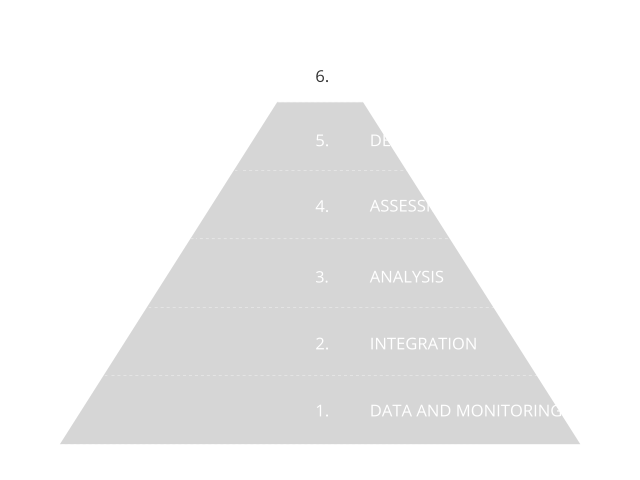
Environmental indicators are based on graphs, maps and assessments and as such present environmental trends in Slovenia. The indicators represent one of the four pillars of our environmental reporting, and are prepared in accordance with the Environmental Protection Act. The Environmental Indicators in Slovenia website enables users to browse among 180 indicators. They are based on numerical data and they indicate the state, characteristics and trends of environmental development in Slovenia. They are prepared using a systematic approach based on data and monitoring, as shown in the information pyramid.

Did you know?

Neutral

One of the main reasons of mortality due to respiratory diseases is in Slovenia chronic pulmonary disease (COPD). The highest mortality rate due to respiratory diseases in Slovenia is in Podravska and Pomurska region and the lowest in Central-Slovenian region (2022–2024). Mortality due to respiratory diseases is decreasing; in the period 2017 to 2021 it decreased from 62/100.000 inhabitants to 43/100.000 inhabitants in the year 2024. This can be attributed to the “harvesting effect” of COVID 19.

Good

In 2022, greenhouse gas (GHG) emissions from sources according to the Regulation (EU) 2018/842 increased by 3.2% compared to the previous year, but in 2023 they decreased by 4.4% and were 7% below the annual target set by Regulation, thus achieving the indicative annual value. The 2030 target set by the National Energy and Climate Plan from 2020 (NECP 2020) is more ambitious and in 2023 the indicative annual value set by the NECP 2020 was not achieved, lagging behind by 0.5 percentage points.

Good

In the period 1992–2023 nitrogen surplus in Slovenian agriculture decreased. Trend analysis for this period shows that gross nitrogen surplus decreased on average by 1.4 kg N/ha per year or by 54%, and the net surplus by 1.2 kg N/ha per year or by 85%. The lower surplus was mainly due to a 43% increase in nitrogen removal by crops and a 6% decrease in nitrogen input per hectare of utilized agricultural area. A lower excess of nitrogen indicates better nitrogen management in agriculture and consequently a reduction in emissions of nitrogen compounds into the environment.

Bad

The frequency of agricultural drought in Slovenia has been increasing in recent decades. Since year 2000, natural disaster due to drought was declared seven times in Slovenia, the most severe of which occurred in 2003, 2012, 2013, 2017 and 2022. Drought keeps occurring with increasing intensity and in areas and seasons where there have not been problems in the past. An additional risk for drought damage in agriculture present rapidly developing droughts in summer (so-called "flash droughts"), which occur during heat waves.

Neutral

2024 was the second consecutive year with above-average water abundance, with no surface water drought observed in any season. However, over the past twenty years, hydrological droughts of surface waters have become both more frequent and more intense compared to previous periods, with greater variability between individual years. Very dry and very wet years now alternate with periods of hydrologically normal conditions. The drought intensity during the growing season has become more frequent, though it has been less severe in the past decade than in the previous one.

Good

More than half of households in Slovenia have already used financial incentives for energy efficiency and renewable energy sources or are actively considering it. The index of household preferece for financial incentives offered by the Eco Fund increased positively by 4 index points from 2019 to 2022, when it was 52 on a scale from 0 to 100. Preference for these financial incentives varies between regions. On the one hand, knowledge and interest in the Eco Fund services is decreasing, while on the other hand, the share of households that have opted for these services again is increasing.